

 AI-assisted studio view
cs-product-009
Stainless steel mechanical joint
A stainless steel joint with a cylindrical body, central bore and external grooves. Identify the contact surfaces and fit requirements for your assembly.
Explore component
Studio image: AI-assisted presentation. Select an original photograph to review the source.
Threaded components / cs-product-010
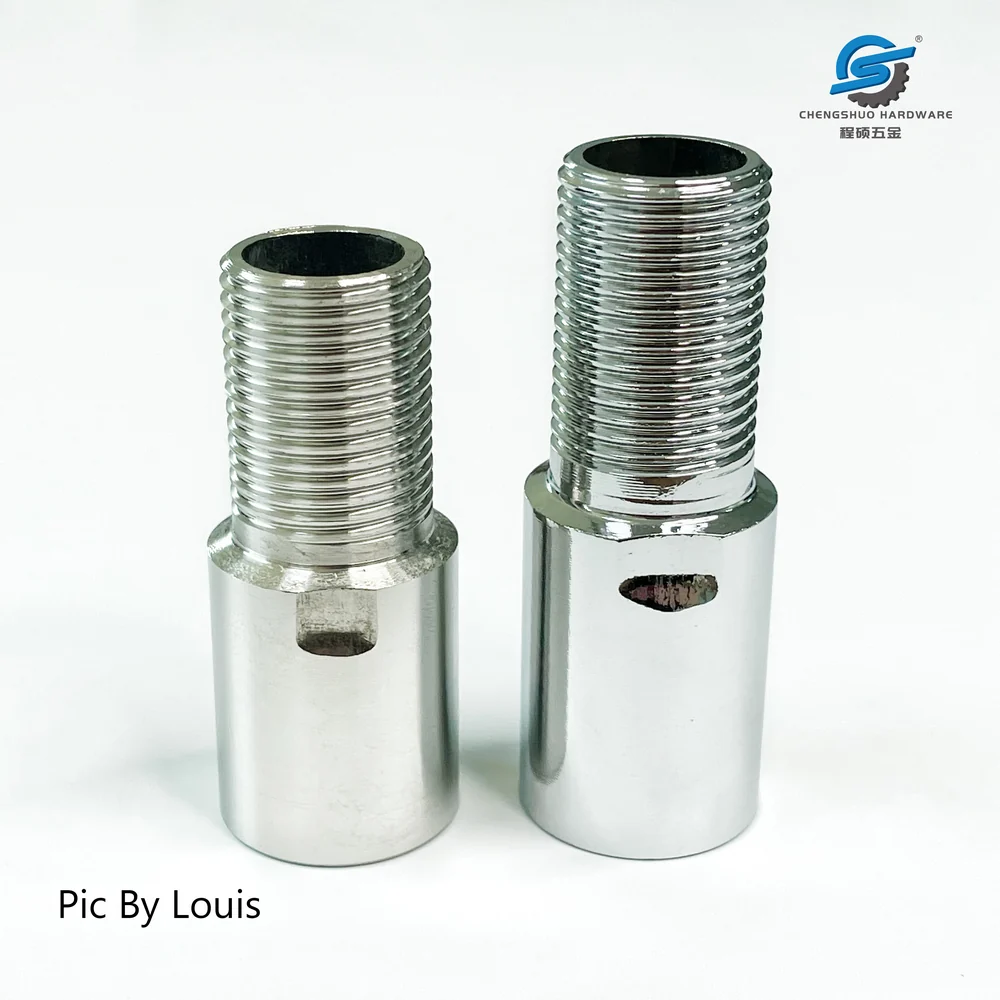
Use this stainless steel coupling reference to define a hollow connection part with external threads. A useful supplier enquiry brings the bore, thread designation, mating faces and delivered condition into one controlled drawing and a clear sample-acceptance plan.
Send your drawing, quantity and mating-part requirements for a project-specific quotation.
Download review brief
THE PRODUCT CASE / YOUR BUYING DECISION
An external thread and a transverse hole bring different review questions into one coupling. Use this stainless steel reference to specify the mating thread, installation access and internal edge condition before comparing manufacturing and inspection proposals.
Explore this product caseBEFORE YOU RELEASE THE DRAWING
Use these guides to define the records and checks your component needs.
Reduce uncertainty in stainless threaded assemblies by reviewing material pairing, thread condition, lubrication compatibility and controlled assembly trials.
303, 304 or 316 Stainless Steel for Small Machined Parts?Compare machining, service exposure and downstream operations before approving a stainless steel grade for custom shafts, sleeves or threaded components.
Threaded Sleeves: Define the Thread, Gauge and Finished ConditionSpecify straight-thread sleeves and turned fittings with a complete designation, usable thread length, agreed gauge checks and acceptance in the delivered condition.
Cross-Hole Deburring of Turned Parts: Define Internal Edge AcceptanceSpecify hidden intersections, permitted edge changes and verification access so a turned fitting or contact component has an inspectable deburring requirement.
Made-to-drawing procurement
Updated
A coupling quotation becomes more useful when it identifies what actually joins the two sides of the assembly. Mark the external thread, the through passage and the faces or shoulders that locate the component. Include the mating-part information needed to understand each connection. If the two ends have different requirements, identify them separately instead of describing both with one general coupling size.
The published Chengshuo reference shows stainless steel hollow forms with visible external threads. Use that geometry to explain your component, then supply the dimensions and connection details for the item you intend to purchase. Give the drawing number, revision and units. A model can clarify the shape, while the controlled drawing states the requirements used for quotation and approval.
Define the supply boundary alongside the drawing. State whether the enquiry covers the loose machined component, a matched pair or additional agreed assembly work. List any bought-in seals, fasteners or other mating items separately where relevant. This helps purchasing compare offers that cover the same physical parts, documentation and acceptance tasks rather than different interpretations of a finished connection.
Give the thread system, size and required fit or acceptance gauge in the drawing. Identify the usable engagement and any runout, entry or relief requirement needed by the design. Describe the delivered condition in which the thread is checked. Where a coating or other treatment is requested, identify its scope and the features on which the final condition matters.
Place the bore and locating surfaces within a defined datum scheme. Distinguish a passage providing clearance from a surface that guides or locates another part. State the relationship between the bore, threaded features and mating face that is necessary for assembly. Add a section where an internal step, transition or end feature would otherwise be ambiguous. The review should be able to identify the function of each controlled surface.
Write the required stainless steel designation and material standard explicitly. Include the type of material record you need and the way it should be linked to a sample or delivery batch. If you permit another material, identify the approval route before ordering. Keep the material requirement, surface condition and critical geometry together under the same drawing revision.
Agree the component-level inspection scope before sample manufacture. Identify which measurements should be reported and which gauges or mating parts are used for verification. Describe any installation, leak or other functional test as a separate requirement with its own procedure and acceptance rule. The reviewer can then distinguish dimensional inspection of the component from qualification of the assembled connection.
| Feature | Enquiry and acceptance |
|---|---|
| Connection | Thread system, size and mating parts Record: Controlled drawing revision |
| Engagement | Usable thread length and end details Record: Agreed thread acceptance |
| Bore | Passage or locating function Record: Feature-level inspection |
| Material | Stainless designation and standard Record: Requested material record |
| Sample | Measurements and separate assembly checks Record: Recorded approval decision |
| Delivery | Thread protection and identification Record: Agreed packing scope |
Send the current drawing, material specification, sample quantity and first order quantity with the delivery destination and required timing. Highlight the thread interfaces, bore and contact faces that decide acceptance. List the inspection and material documents needed for the purchasing decision. If a mating component or gauge is supplied by the buyer, state how it will be made available and which check it supports.
Keep sample identification with the drawing revision, measured results and assembly decision. Record a proposed change to thread engagement, seating, material or finishing as a controlled update. Identify which checks need another review before approving production. The quotation and resulting order should state the agreed component, documentation, additional operations and delivery scope.
For repeat delivery, define protection for external threads, bore openings and mating faces. Specify the part, revision and batch identification that receiving should retain after unpacking. Review any change to the mating hardware or assembly process before placing another order. Use the enquiry link below to carry this coupling reference into the brief, and share only drawings you are authorised to disclose.
It shows hollow stainless steel connection forms with external threads. The purchased dimensions and mating details are defined by your own controlled drawing.
Provide the thread system, size, acceptance requirement, usable engagement and any entry or relief feature that affects assembly.
Identify whether it provides clearance or location, define its datum relationship and state the relevant dimensions and inspection requirements.
State the designation and material standard required for the actual project. Permitted alternatives and documentation are agreed before the order.
List any leak or assembly test separately, with procedure and acceptance rule, so its scope can be reviewed and agreed.
Keep drawing revision, sample identity, inspection results, material records and the agreed assembly decision together. State protection and batch identification for delivery.
AI-assisted studio viewA stainless steel joint with a cylindrical body, central bore and external grooves. Identify the contact surfaces and fit requirements for your assembly.
Explore component AI-assisted studio view
A brass valve-joint form with a bored body and textured collar. Thread, sealing and interface requirements should be defined in your drawing.
Explore component AI-assisted studio view
An internally threaded lock nut with repeated outer recesses. Specify the thread standard, mating part and tool-access geometry for your version.
Explore componentFROM EXAMPLE TO YOUR REQUIREMENT
Use an example to explain your idea.
Your own drawing defines the final specification.
FROM COMPONENT TO PROJECT
Start with the component geometry, then check what the drawing, sample and order records need to establish for your own part.
Send the current drawing with quantities and critical requirements. The review is the starting point for agreeing scope, quotation and sample approval.
Request a drawing review