
 5 min read
Start with the service, not the catalogue label
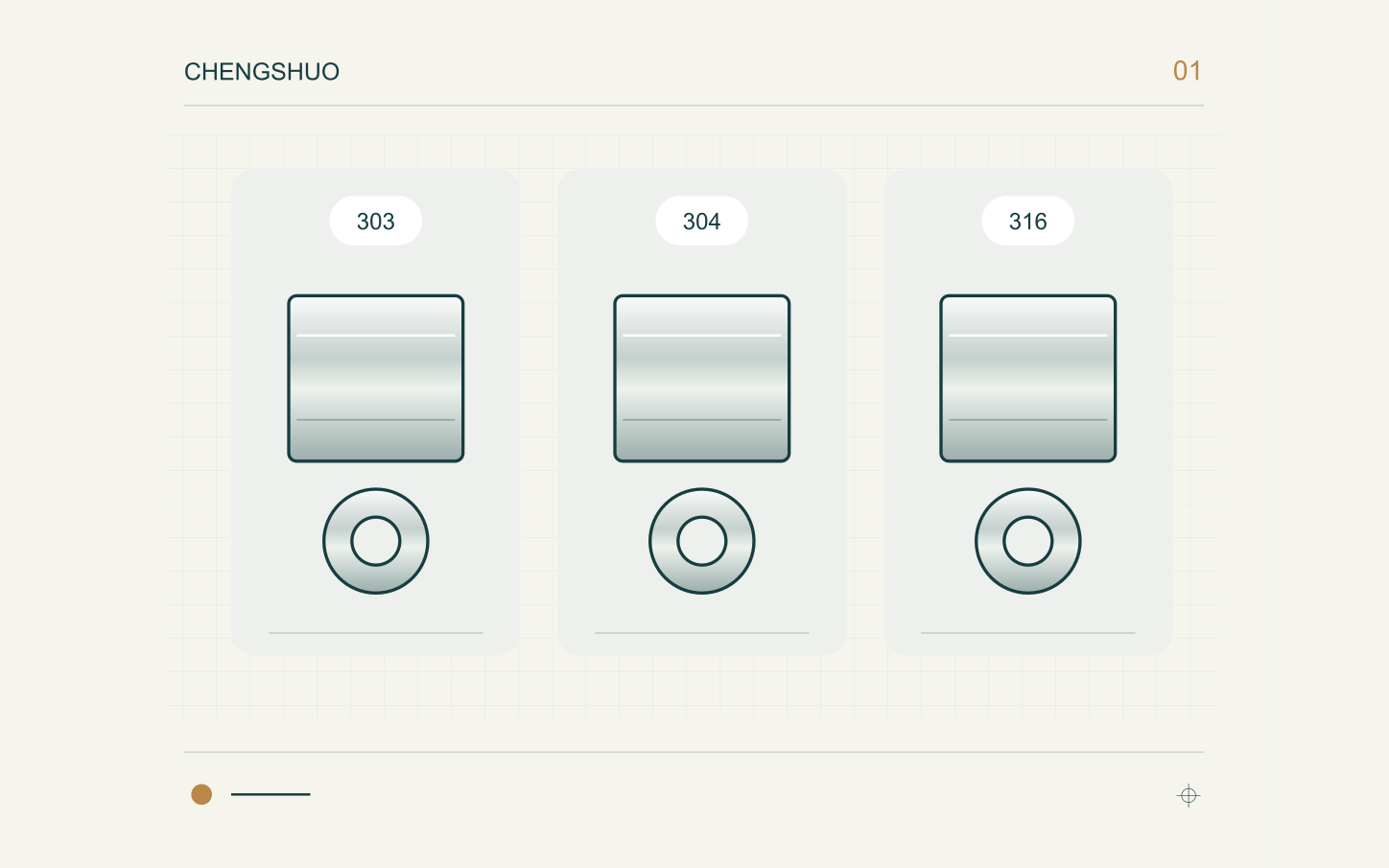
Choosing 303, 304 or 316 for a small CNC turned part starts with its working environment. List the fluid or cleaning agent, concentration, temperature, exposure duration and any trapped liquid at an interface. Also state whether the part will be welded, formed or finished after machining. A purchasing description saying stainless steel leaves these decisions unresolved. Keep the design owner responsible for material suitability; the machining review should identify manufacturing consequences and missing inputs, rather than silently replace the specified alloy.
303: consider the machining benefit and its trade-off
Carpenter Technology explains that sulfur additions improve the machining behaviour of 303 while reducing corrosion resistance and weldability relative to the comparison grades in its guidance. That makes 303 a candidate when machining is important and the approved service conditions permit it. It does not make 303 a universal substitute for 304. For small bores and repeated turning operations, ask how chip control, tool access and the requested surface will be evaluated on the actual geometry. Never convert an alloy ranking into a promised cycle time.
304 and 316: compare exposure before cost
Carpenter describes the chip-control challenges of 304 and 316; a quote should allow for the selected grade rather than assume the same cutting route. Outokumpu identifies 316 as a molybdenum-alloyed stainless steel for increased corrosion-resistance demands. However, its service-experience paper also documents situations in which ordinary 304 and 316 suffered localised corrosion. Temperature, chemistry, crevices and cleaning conditions still matter. Neither the word marine nor a brighter machined surface establishes suitability for a particular assembly, and this article supplies no corrosion-life guarantee.
Freeze the grade, condition and approval route
Put the exact grade, applicable material specification, product form and required condition on the controlled drawing or purchase specification. Identify whether a low-carbon variant is required; do not treat 304, 304L, 316 and 316L as interchangeable labels. Request the material document and heat or batch traceability that the project needs. If a supplier proposes an alternative, compare the technical difference, availability and sample scope in writing before changing the order. Finish requirements and dimensional acceptance should remain linked to that approved material revision.
Illustrative review: one sleeve, two applications
Consider the same threaded sleeve used inside a dry instrument and in equipment exposed to repeated cleaning. This is an illustrative decision exercise, not a Chengshuo delivery case. The first review might investigate a machining-focused grade; the second must start with the actual cleaning chemistry and joining process. The exterior shape alone cannot select the alloy. Ask the design owner to approve the material first, then compare quotations for that basis, including final surface condition, thread checks and the sample evidence needed to release production.
Send a material-specific review package
Send Chengshuo the controlled drawing, proposed material and quantities for a part-specific review. A useful reply should distinguish confirmed requirements, proposed alternatives and questions awaiting the design owner. The following checklist keeps procurement and engineering aligned without implying that a catalogue reference is certified for your application.
- Identify the grade, material standard, product form and supply condition.
- Describe service fluids, cleaning, temperature and relevant joining operations.
- Mark critical surfaces, finish requirements and acceptance after finishing.
- Agree material documentation, traceability and the sample inspection scope.
- Require written approval before any grade or condition substitution.
FROM THE GUIDE TO YOUR PART
Put the checks into context.


References & further reading
- Carpenter Technology — Machining austenitic stainless steels

- Outokumpu — Supra stainless steel range
- Outokumpu — Stainless steels in aggressive fresh waters
General planning guidance. Feasibility and acceptance criteria are confirmed against your drawing.