

Set a comparable stainless steel purchasing scope
A description such as stainless precision part leaves several purchasing decisions open. Provide the drawing number and revision, the intended material designation and the quantities you want quoted. Identify whether you need a loose component, a set of mating parts or additional assembly work. Separate those items so each supplier can respond to the same defined requirement.
Mark the interfaces that control installation. These may be a locating shoulder on a shaft, the relationship of a bore to an outside surface or the orientation of a slot. Show the applicable drawing datum and any mating-component reference. Include surface and edge requirements where they affect assembly or receiving inspection. A controlled model can support the explanation, alongside the dimensioned drawing.
Match your geometry to an actual component reference
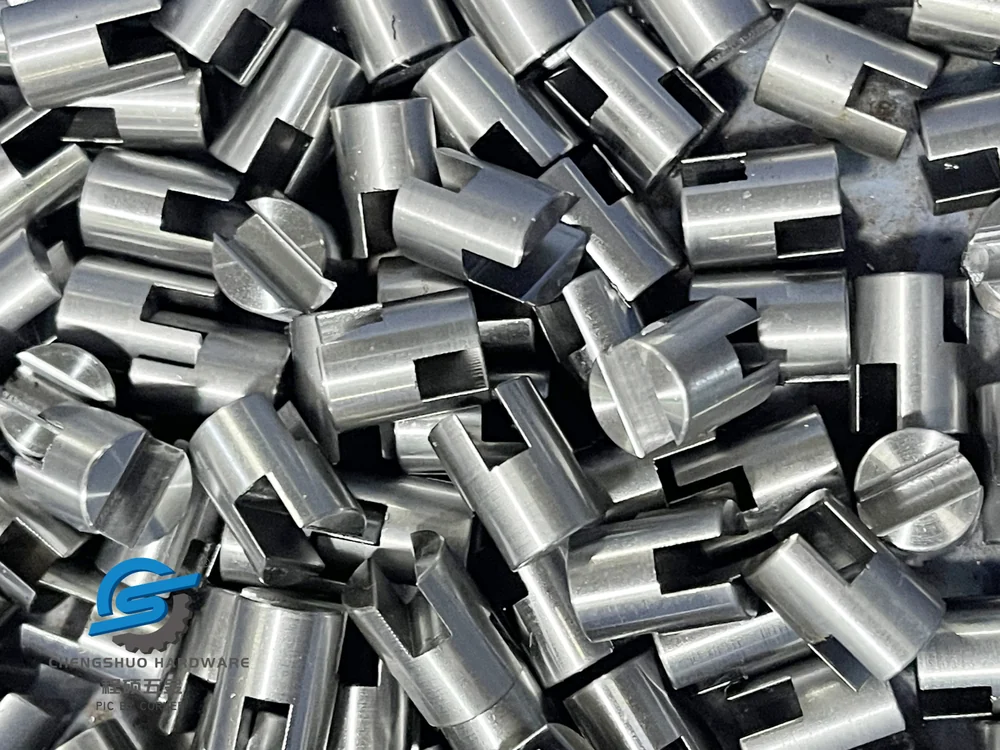
Our slotted stainless steel component is a short cylindrical form with a broad end slot. Its product-specific source describes lathe turning followed by CNC milling. Use it to explain a requirement where the turned body and the milled feature must be related in the drawing. Define the slot position, locating surfaces and any required angular relationship for your own part.
The stainless main-shaft reference adds stepped diameters, end features and circumferential details. The mechanical-joint reference shows a hollow centre and external grooves. Their published material identifies stainless steel and CNC machining. Choose a reference to communicate the form, then specify your actual dimensions, material and acceptance requirements. Each linked page keeps the individual component context available for review.
Keep grade, surface condition and application requirements explicit
Write the stainless steel designation and relevant material standard in the enquiry. If more than one material is permitted, list each option with its approval conditions. State the material documentation needed with samples or delivery, including how the document should relate to the part and batch. This avoids treating a general material family as a completed grade specification.
Identify the delivered surface condition and any separately required treatment. Show the areas that must meet a particular roughness, appearance or contact requirement on the drawing. For threaded parts, provide the thread designation and assembly requirements. If the intended application calls for cleaning, corrosion testing or other qualification, describe the required procedure and acceptance rule so its scope can be reviewed separately.
Agree measurements and sample decisions before ordering
Select the features that decide acceptance and state how they should be reported. For a slotted cylinder, this may include the datum relationship between the body and slot. For a shaft, identify the locating surfaces and mating fit. For a hollow joint, show the functional bore and contact surfaces. Define the delivered condition in which those measurements are required.
Keep dimensional inspection, assembly review and functional testing as distinct requirements. If a buyer-supplied gauge or mating component is needed, describe how it will be made available and which decision it supports. Request the appropriate sample records before approving a production order. Record any drawing change under a new revision and identify which characteristics need another review.
Turn the drawing into a supplier enquiry
Send the current drawing, supporting model, material designation, sample quantity and first order quantity. Add your delivery destination and requested timing. Highlight the functional surfaces, finishing requirements and documents needed for the purchasing decision. If you expect repeat orders, show that expectation separately from the first confirmed quantity.
The enquiry link carries this stainless steel material page into the brief. Link a related component where it helps describe the shape, and include your own controlled requirements. Share only drawings you are authorised to disclose, with an NDA agreed first where needed. The resulting quotation should identify the accepted machining, treatment, inspection, packing and delivery scope for that particular revision.
Reference parts and drawing resources
- Stainless steel slotted valve part
- Stainless steel main shaft
- Stainless steel mechanical joint
- Machining capabilities
- Prepare your drawing package
Procurement questions
Which stainless steel parts can I use as references?
This page links a slotted cylindrical component, a stepped main shaft and a hollow mechanical joint from Chengshuo’s published range.
Is the machining route confirmed for every example?
The slotted-component source states turning followed by CNC milling. The shaft and mechanical-joint sources identify CNC machining; the project route is reviewed against your drawing.
How should I choose the stainless steel grade?
Provide the designation and material standard required by your design. Any alternatives and required material records should be reviewed before the order.
What should I specify for slots and locating features?
Show the drawing datum, location and relationship to the mating surfaces. Include any angular requirement that determines assembly.
Can the enquiry include cleaning or application tests?
List the required procedure, conditions, documents and acceptance rule separately so the requested scope can be reviewed and agreed.
When are quantities, price and delivery confirmed?
Separate samples, the first order and expected repeat quantities. The actual drawing, material, inspection and delivery requirements form the basis of the quotation.