

 AI-assisted studio view
cs-product-013
Aluminum USB hub case
An aluminum USB-hub enclosure with a slim profile and multiple interface openings. Port positions and the internal assembly clearance guide the drawing review.
Explore component
Protect. Connect. Assemble.
Bring the mechanical envelope and its assembly interfaces into one housing enquiry. Use Chengshuo reference parts to describe the form, then supply the actual drawing, material, quantity scenarios and acceptance requirements for your enclosure or frame.
Explore 5 examples5 component examples
AI-assisted studio viewAn aluminum USB-hub enclosure with a slim profile and multiple interface openings. Port positions and the internal assembly clearance guide the drawing review.
Explore component AI-assisted studio view
An aluminum box enclosure with an open interior and side cutouts. Define the mounting pattern, wall sections and clearances around internal components.
Explore component AI-assisted studio view
A watch-case frame with a shaped outer profile and open interior. Review the assembly opening, internal recesses and cosmetic surfaces together.
Explore component AI-assisted studio view
A flashlight-body example with a grooved cylindrical exterior and stepped end features. Define the internal clearance, joining details and required material.
Explore component AI-generated engineering concept
A machined connector-shell concept for panel installation: connect the thread, panel shoulder, orientation feature and internal insert seat.
Explore componentDRAWING-BASED PROCUREMENT
Updated
A useful housing quotation starts with a defined supply boundary. Identify the body, cover, frame or other separate items to be purchased and show how they fit together. Include the internal parts that control clearances and fastening positions. State which items the machining supplier delivers and which are provided elsewhere. This makes it possible to compare offers for the same physical components rather than for several different interpretations of a finished enclosure.
Chengshuo catalogue references include slim aluminum connector housings, open aluminum box forms and open case frames. They provide concrete examples of internal openings, side cutouts and shaped outer profiles. Select a related reference to communicate the geometry, then attach your own controlled part and assembly drawings. Specify the actual material grade, delivered condition and additional operations in the enquiry so that the eventual order has its own clear technical basis.
Keep product-level requirements assigned to their owners. If the assembly needs a leak, thermal, electrical or other functional evaluation, name the actual configuration, test procedure and acceptance reviewer. Clarify whether that work is included in the requested supply or carried out by the device manufacturer. A housing machining brief can then focus on the agreed envelope, surfaces and interfaces while separately identifying any additional qualification required for the completed device.
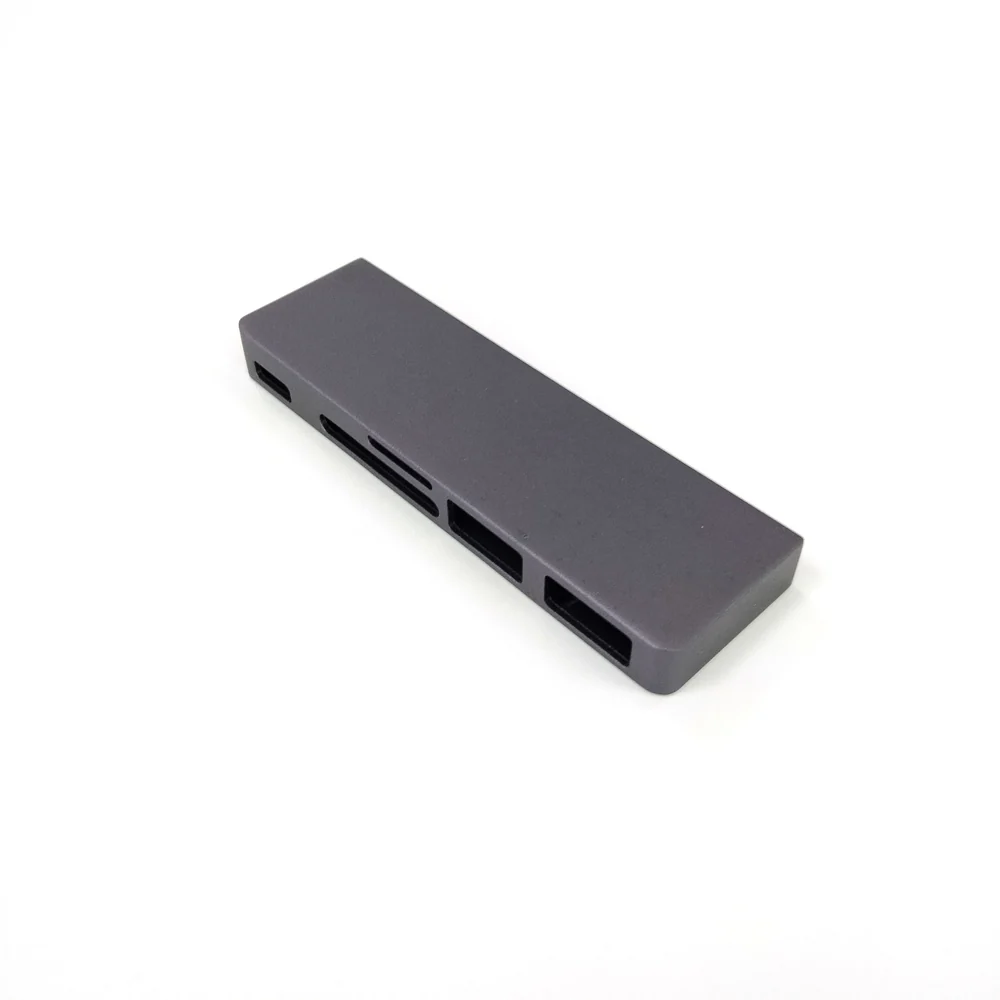
Place connector cutouts, internal supports and fastening holes within the same drawing datum system. Show the controlled mating-component information needed to assess each opening. Distinguish clearance contours from locating or contact surfaces. Provide sections where a wall, recess or stepped face would be ambiguous in an outside view. The reviewer should be able to identify which surface sets the assembly position and which features simply provide access or space.
Consider the assembly sequence when specifying screw access, internal bosses and cover joints. Identify the tool clearance and the mating hardware that the reviewer should consider. Mark requirements for threads and important edges explicitly, including the delivered condition in which they are checked. Define the dimensions and geometric controls required by your design. Ask for a review of inspection access for an enclosed feature before its acceptance becomes a receiving problem.
Describe cosmetic surfaces and any proposed finish as separate purchasing requirements. Mark the visible zones, contact areas, masking needs and marking position on the controlled drawing or agreed visual reference. State which dimensions apply after treatment and identify any surface that needs special protection. If a visual sample governs acceptance, keep its identifier and approval criteria with the part revision. The quotation can then distinguish machining, finishing, marking and documentation consistently.
Send Chengshuo the housing and relevant assembly drawings, material requirement, sample quantity and production scenarios. Highlight the connector openings, mounting interfaces and finish zones that need particular attention. List the inspection records and other documentation you require with samples. Include the requested timing and identify who can approve an interface clarification. A complete enquiry reduces differences in assumptions about the supplied parts, extra operations and acceptance work.
Before sample manufacture, agree the reported dimensions, the delivered condition and any assembly review with actual mating components. Keep sample identifiers with dimensional results, cosmetic approval and the installation decision. Where a connector or internal component is changed, review its effect on clearances, fastening and openings before approving production. The resulting quotation confirms the selected supply boundary, documentation, delivery timing and commercial conditions for that drawing revision.
For repeat delivery, agree protection for connector edges, threads and cosmetic faces. Define the part, revision and lot identification that receiving needs to connect the shipment to the approved sample basis. Recheck material, finish, mating parts and assembly changes before ordering another batch. The same controlled package should support purchasing, component inspection and the separate device-level qualification owned by the assembly reviewer.
| Feature | Enquiry and acceptance |
|---|---|
| Supply boundary | Body, cover, frame and separate items Record: Controlled part and assembly revisions |
| Internal envelope | Installed parts, supports and assembly sequence Record: Approved interface definition |
| Openings | Connector contour, position and datum Record: Feature-level inspection requirements |
| Finish | Visible zones, treatment and marking Record: Agreed visual acceptance basis |
| Sample review | Delivered condition and actual mating parts Record: Dimensional and assembly decision |
| Delivery | Surface protection and lot identity Record: Approved packing and receiving references |
Provide the part and assembly drawings, material, quantities and delivered condition. Identify internal clearances, connector cutouts, fastening, cosmetic areas and sample documentation.
The catalogue includes slim connector housings, open box enclosures and frame forms. Use the related part pages to describe a similar geometry for your drawing-based enquiry.
Define their complete contour and location in the drawing datum system. Supply the applicable mating-component information and distinguish clearance from locating or contact features.
Mark the visible zones, requested treatment, masking and marking requirements. State the final dimensional condition and identify the visual sample or criteria used for acceptance.
Specify any additional test using the actual assembly, procedure and acceptance owner. Agree that scope explicitly alongside the machining and dimensional inspection of the supplied components.
Keep drawing revisions, sample identifiers, inspection results and finish approval together. Review mating-component changes and carry the agreed protection and lot-identification requirements into the order.
FROM EXAMPLE TO YOUR REQUIREMENT
Use an example to explain your idea.
Your own drawing defines the final specification.