
 5 min read
Dimension the depth the assembly actually needs
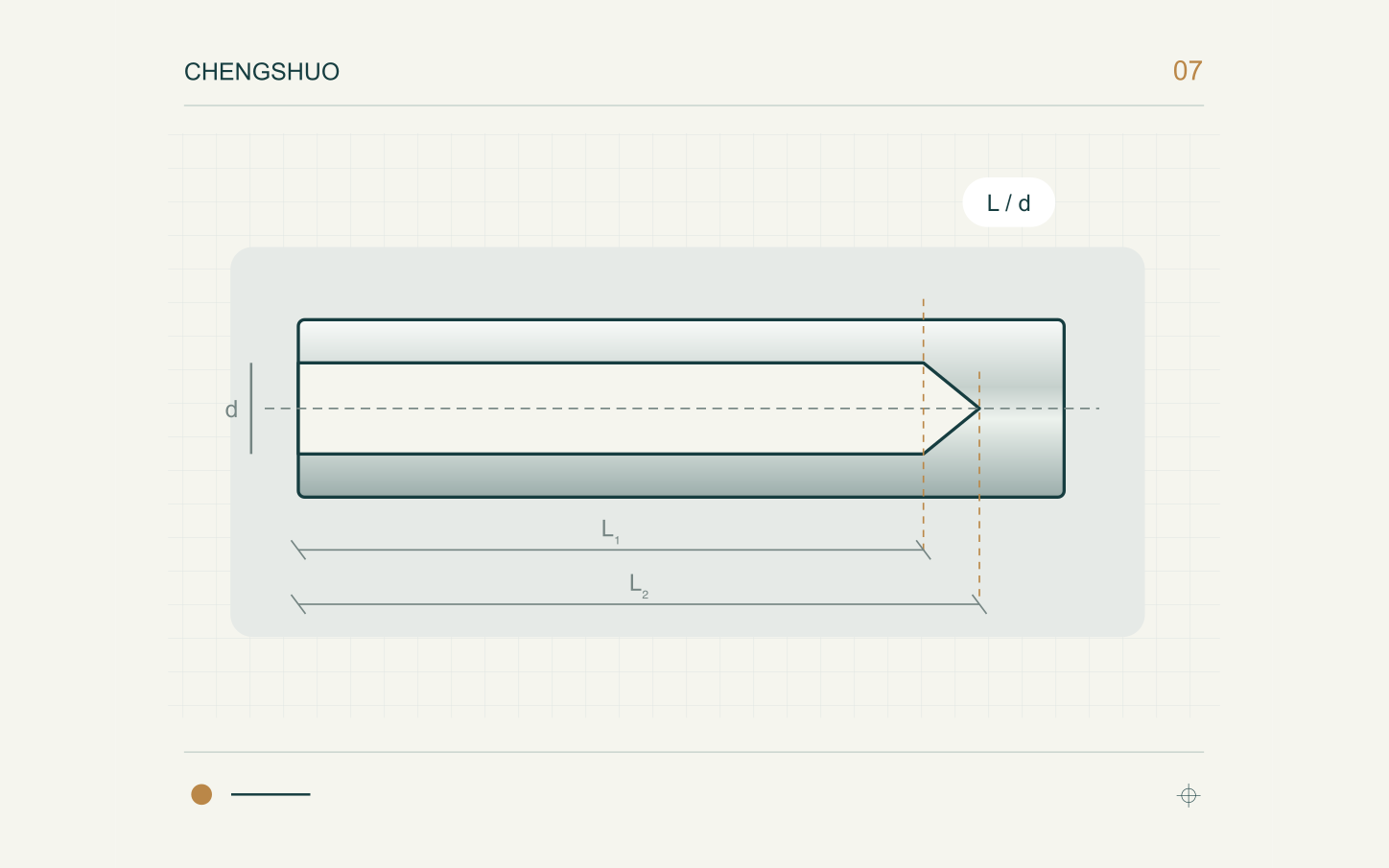
Consider an illustrative guide sleeve with a blind axial hole receiving a straight pin. The pin needs a defined length of usable cylindrical bore; the conical drill-point region is a different feature. Show both in section and state the reference face for each depth. If the end must instead be flat or have a specified profile, draw that requirement explicitly. For a through hole, identify the exit surface and required opening. A single depth number without this context leaves the machining and receiving teams room to interpret different geometries.
Show the tool path beyond the nominal hole
Include the entry face, counterbore, surrounding walls and any feature close to the exit. Identify angled surfaces, internal steps and interrupted regions in the section view. State whether the hole can be approached from one end or both, and flag any restriction imposed by the assembly. These details let the supplier review guidance, support and machining sequence. A photograph showing an opening cannot establish that a passage is continuous, straight or accessible throughout. Cross-hole edge acceptance is a separate review, linked below when your design contains an intersection.
Review the complete drilling route
Provide hole diameter, usable depth, material grade and condition, quantity and the controlled internal features. Guhring's gun-drill quotation form asks for workpiece depth, tolerance, machine arrangement and coolant information. Its RT 100 T guidance also illustrates a tool-specific pilot-hole procedure. These are reasons to review the actual tooling and equipment together, not instructions to apply that procedure to every hole. Ask the supplier to identify process assumptions and any proposed design change. A length-to-diameter ratio alone does not confirm feasibility or an achievable tolerance.
Separate hole size from its relationship to the part
Identify the requirements for diameter, axial location, orientation, form and internal texture separately where the design needs them. State which zone each requirement covers and how it relates to the external locating surfaces. For the illustrative sleeve, checking the entrance diameter alone would leave the deeper guiding region unaddressed. A passing pin check also should not be presented as a complete numerical diameter profile. Select controls with the responsible designer, then ask the manufacturing and quality teams to review how those particular controls can be achieved and evaluated.
Agree what the proposed inspection can actually reach
Ask for the measurement or verification method, access limit and covered locations before approving the inspection plan. Discuss blind-end geometry and deeper regions explicitly. If a special method or a sectioned sample is proposed, agree its suitability, sample scope and effect on delivery; do not assume destructive examination is included. Keep any unverified region visible as an open question. A dimensional record does not establish cleanliness, pressure integrity or flow performance. Those requirements need separate criteria and an agreed test responsibility when relevant to the assembly.
Send a sectioned drawing and a clear evidence request
For a Chengshuo review, provide the controlled drawing, material, quantities and inspection requirements. The guide sleeve and adjustment-stem references below support a discussion of internal geometry; they do not prove a particular drilling depth or verified passage. Close these items before sample release:
- Depth: distinguish usable full-diameter length, drill-point extent and reference face.
- Access: show entry, exit, interruptions and permitted machining directions.
- Function: identify the mating part and the internal zones that control its position.
- Evidence: agree methods, accessible locations and sample coverage for each requirement.
- Exceptions: resolve inaccessible features and proposed geometry changes in writing.
FROM THE GUIDE TO YOUR PART
Put the checks into context.


References & further reading
- Guhring — Gun-drill quotation inputs and workpiece information

- Guhring — RT 100 T deep-hole drilling application guidance
General planning guidance. Feasibility and acceptance criteria are confirmed against your drawing.