CHENGSHUO / FLUID CONTROL & EQUIPMENT
Look beyond Review connections through the thread, bore, sealing interface and cleanliness requirements together.
Explore relevant studies Application illustration START WITH FUNCTION
A useful review starts Thread standard, operating medium, sealing geometry and cleanliness requirements.
These application pages help engineering and sourcing teams define a custom requirement. Part suitability is confirmed through the drawing review; the examples do not imply a qualified end use.
01
Thread & engagement 02
Sealing interfaces 03
Internal burrs RELEVANT APPLICATION STUDIES
Work through APPLICATION STUDY 01 Illustration Fluid control & equipment
Define thread form, engagement, sealing surfaces and final inspection condition before assessing a custom connection for your equipment.
Threads & sealing Inspection
APPLICATION STUDY 02 Illustration Fluid control & equipment
Turn a general deburring note into named internal features, inspection access and agreed cleanliness evidence for small bored components.
Burrs & cleanliness Inspection
Bring your component into the review. Thread standard, operating medium, sealing geometry and cleanliness requirements.
Request a drawing review Fluid control & equipment / APPLICATION STUDY
Threaded connections & sealing Define thread form, engagement, sealing surfaces and final inspection condition before assessing a custom connection for your equipment.
Engineering Purchasing Quality
Start the review with Complete the thread definition Identify the applicable thread standard, designation, pitch, fit or tolerance class, handedness and required engagement. Show internal or external form, usable threaded length and relevant runout or relief requirements. Resolve discrepancies between the model and drawing before choosing a manufacturing or gauging approach. State whether acceptance applies before or after a specified treatment.
Define where the connection seals Identify the intended sealing system and the surfaces controlled by your design. Provide required geometry, finish, edge condition and mating details for those surfaces. Keep thread acceptance separate from sealing acceptance. If the seal or mating component is supplied by another party, confirm the interface revision and responsibility for compatibility review.
Separate component checks from equipment tests Agree the dimensional checks and any specified gauges for the finished component. Define material documentation, cleanliness and packaging requirements where relevant. If pressure, leakage or another functional test is required, supply the approved procedure, acceptance criteria and qualified test owner. Confirm supplier capability and scope before assuming that such testing is included in a machining quotation.
The linked coupling and joints are published Chengshuo component examples. Their use in a particular fluid system, pressure classification, leak performance and completed customer qualification have not been established. Review and test requirements are project-specific.
Fluid control & equipment / APPLICATION STUDY
Internal burrs & cleanliness Turn a general deburring note into named internal features, inspection access and agreed cleanliness evidence for small bored components.
Engineering Quality
Start the review with Locate the hidden intersections Provide section views for cross-holes, bore ends, recesses and any other region that cannot be judged externally. Mark the boundaries of the required edge condition, including edges that must retain their designed geometry. Ask the supplier to review tool access, removal access and inspection access as separate questions before confirming the route.
Make the acceptance language observable Replace ambiguous terms with the customer specification or an agreed, reviewable criterion. Define permitted edge changes and prohibited damage to adjacent surfaces. Where direct visual access is limited, agree the method and coverage needed to assess that feature. Reference images can clarify appearance, but should not silently replace a dimensional or cleanliness requirement.
Define cleaning and protection as a scope Identify required cleanliness criteria, relevant process restrictions, verification evidence and the condition at delivery. Confirm whether inspection or handling occurs after cleaning, and how accepted parts remain protected. If a test requires special equipment or external support, establish responsibility and feasibility before treating it as included. Do not adopt a universal cleanliness grade without an application requirement.
Published photos show external openings on the referenced coupling and valve joint. They do not reveal all internal geometry or prove deburring, cleanliness or fluid-service performance. The internal-feature scenarios here are review prompts for the buyer’s own drawing.
Without JavaScript, the reference fragment cannot prefill the enquiry form. Download this engineering brief or email Alen with this reference . Final specifications are defined by your drawing.


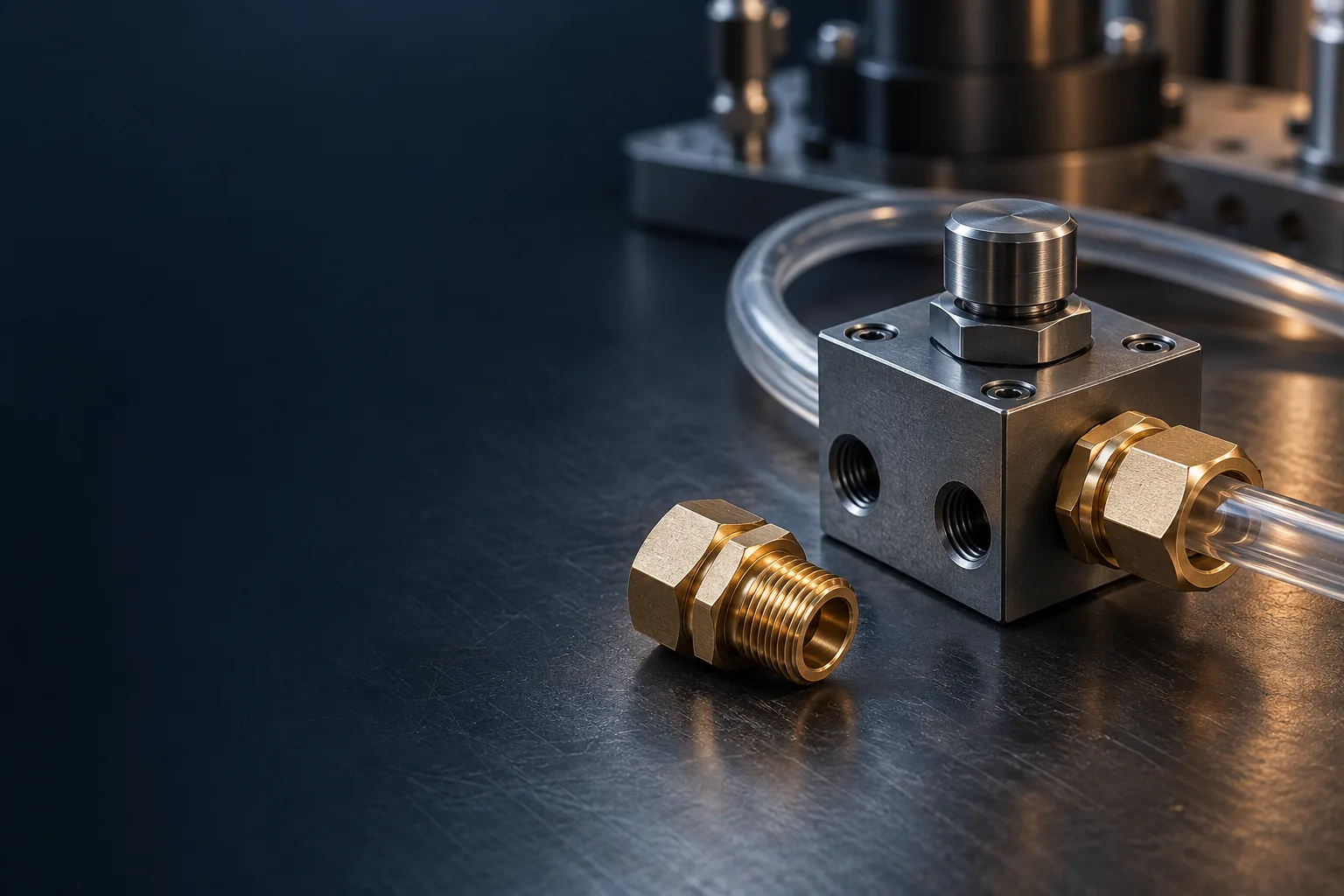 APPLICATION STUDY01Illustration

 Define the critical fit and datum relationship.