

 AI-assisted studio view
cs-product-009
Stainless steel mechanical joint
A stainless steel joint with a cylindrical body, central bore and external grooves. Identify the contact surfaces and fit requirements for your assembly.
Explore component
Chengshuo store product visual — drawing-based reference
Threaded components / cs-product-045
Specify the smooth pivot shoulder and threaded retention as one controlled interface. Chengshuo reviews your actuator clevis shoulder screw against the drawing, stainless-steel requirement, mating stack and requested sample records.
Reference example, not a stocked standard part. Quote and feasibility require your specification.
Download review brief
PURCHASING SCOPE
Specify the smooth pivot shoulder and threaded retention as one controlled interface. Chengshuo reviews your actuator clevis shoulder screw against the drawing, stainless-steel requirement, mating stack and requested sample records.
Identify the current drawing, mating interfaces, requested records and quantity scenarios so the quotation and sample review cover the same component.
BEFORE YOU RELEASE THE DRAWING
Use these guides to define the records and checks your component needs.
Made-to-drawing procurement
Updated
A clevis shoulder screw combines a smooth pivot section with a threaded end that retains the assembly. Before comparing suppliers, show the assembled stack: clevis arms, moving member, washers or bushes, and the mating threaded component. Identify where the shoulder locates and which surfaces must remain free to move. This gives the quotation a clear mechanical boundary and prevents the working shoulder from being treated as an ordinary threaded fastener length.
The Chengshuo catalogue reference CS-SW-228 is recorded as a stainless-steel actuator-clevis shoulder screw with a pivot land and threaded end. The listed process route includes Swiss turning, threading, undercutting and edge finishing. Use the catalogue form to describe the component you require, then provide the exact stainless grade, finished condition and geometry in your enquiry. Specify any proposed finish or treatment as part of the requested delivery scope.
Clarify whether the order is for the screw alone or includes separately agreed bushes, washers or mating parts. A buyer-supplied assembly drawing helps locate the head, shoulder end and thread engagement in one view. If a sample needs to be assembled before approval, identify the parts and the reviewer responsible for that check. The shaft-like pivot dimensions and the fastening requirements can then be discussed against the same controlled drawing package.
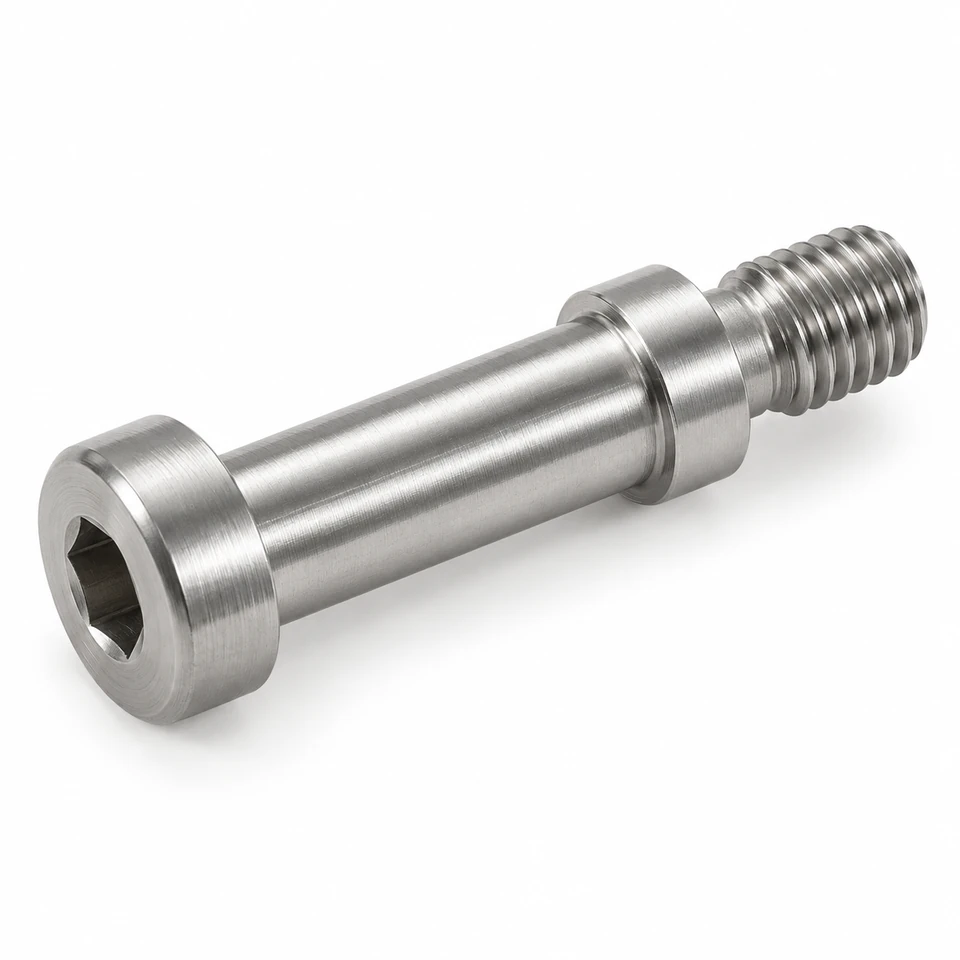
Specify the smooth pivot diameter and usable shoulder length from named references. Show the permitted transition at the head and at the start of the thread, including any relief required by the mating bore or washer. Identify the contact faces that establish the final axial position. If the moving member uses a bush or bearing, include its relevant interface limits so the shoulder drawing and assembly clearance describe the same joint.
Define the thread system, size, pitch, fit and required finished condition at the retention end. Include the available engagement and any hole-depth restriction in the mating component. For a blind hole, review screw projection and clearance at the screw end as part of the assembled stack. A fully engaged threaded end and a freely moving pivot need their own requirements; tightening the joint should be evaluated using the actual shoulder length and mating arrangement.
Name the head style, drive size and installation-access requirements. Mark functional edges, thread entry and any surface protection needed before assembly. If the pivot surface has a specific texture requirement, place it on the controlled feature rather than describing the complete screw as smooth. Agree the measurement or gauge checks that will report these characteristics, with drawing identifiers and sample references retained in the inspection record.
| Feature | Enquiry and acceptance |
|---|---|
| Product scope | CS-SW-228; screw and any agreed supplied items Record: Quoted scope and current drawing |
| Pivot shoulder | Diameter, usable length and reference faces Record: Named dimensional characteristics |
| Mating stack | Clevis, bush, washer and moving-member dimensions Record: Approved interface and sample setup |
| Thread | Designation, runout, engagement and final condition Record: Agreed thread acceptance |
| Material and finish | Stainless grade, condition and treatment Record: Requested material/finish documentation |
| Repeat delivery | Revision, lot identity and protected surfaces Record: Sample approval and receiving records |
Provide the current screw drawing, assembly stack, stainless-steel specification, finish and quantities to Chengshuo. Highlight the pivot diameter, working shoulder length, thread and head-seating requirements. Include the inspection records expected with the samples and indicate the required timing. If a mating dimension is still awaiting approval, identify it as an open project decision so the quotation and sample instruction can follow the correct revision.
Choose the sample review to suit the joint: dimensional checks on the supplied screw, any required thread acceptance and the agreed assembly review with the mating parts. Record the components and condition used by the assembly reviewer. A material certificate or treatment record is included when it has been requested and agreed for the order. Preserve the acceptance decision beside the sample report and the drawing revision that governed the work.
For production and repeat orders, retain the approved shoulder and thread definition, material, finish, sample reference and packing requirements. Review changes to clevis width, washer or bush thickness, mating thread depth and head access before release. Protect the pivot surface and thread during delivery, and agree how revision and lot identity appear on the supplied records. Receiving can then compare the delivered screws with the same documented basis used for purchasing.
Send the screw drawing, mating stack, material and finish, quantities and critical pivot or thread requirements. Include the sample checks and records required for the purchasing decision.
The recorded CS-SW-228 catalogue specifies stainless steel. State the exact grade and delivered condition for your own component so manufacturing and any requested documentation can be reviewed together.
Dimension the usable pivot length from named faces and show the head transition, shoulder end and thread relief. Relate those dimensions to the clevis, bush or washer stack in the assembly drawing.
Compare screw projection with the available usable thread and end clearance for the actual assembled stack. Define the required engagement and shoulder seating before agreeing the screw and mating-hole drawings.
Agree the assembly-review scope, mating-part identities, finished condition and acceptance owner before sampling. Keep the resulting decision linked to the supplied screw’s dimensional report and drawing revision.
Use the approved material, finish, shoulder and thread definition with the sample reference. Call out changes to the clevis stack, hole depth, washers, bushes or installation access so they receive the appropriate review.
AI-assisted studio viewA stainless steel joint with a cylindrical body, central bore and external grooves. Identify the contact surfaces and fit requirements for your assembly.
Explore component AI-assisted studio view
A brass valve-joint form with a bored body and textured collar. Thread, sealing and interface requirements should be defined in your drawing.
Explore component AI-assisted studio view
An internally threaded lock nut with repeated outer recesses. Specify the thread standard, mating part and tool-access geometry for your version.
Explore componentFROM EXAMPLE TO YOUR REQUIREMENT
Use an example to explain your idea.
Your own drawing defines the final specification.
FROM COMPONENT TO PROJECT
Start with the component geometry, then check what the drawing, sample and order records need to establish for your own part.
Send the current drawing with quantities and critical requirements. The review is the starting point for agreeing scope, quotation and sample approval.
Request a drawing review