
 4 min read
Start with the guide-bushing configuration
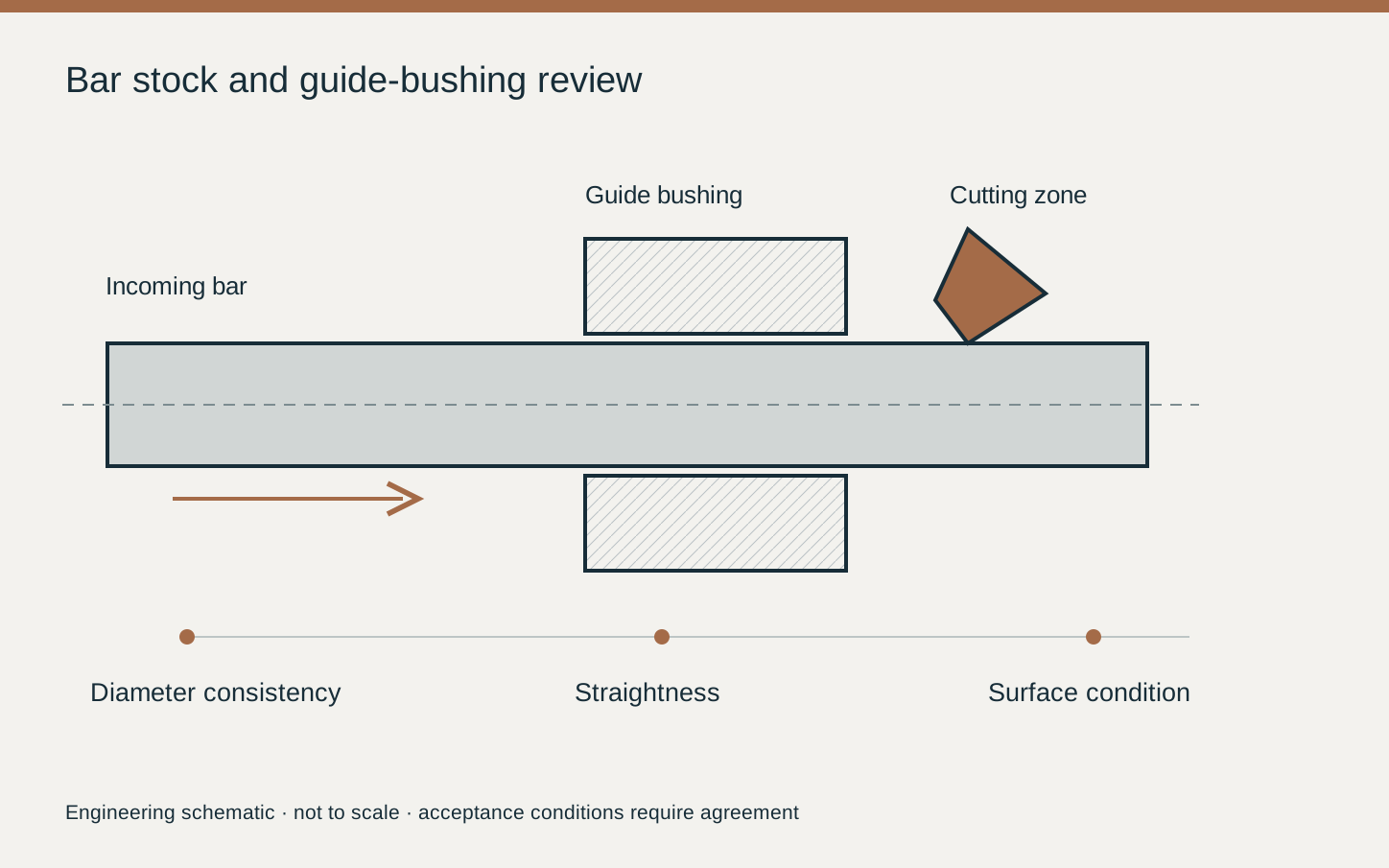
Swiss turning bar stock is part of the machining system, not just a material grade on the purchase order. A guide bushing supports the moving bar near the cutting zone. Its fit must permit feeding while providing the intended support. First establish whether the proposed route uses a conventional, adaptive or no guide bushing. Tornos documents configurations with different material requirements; a limit from one machine brochure should therefore not become a universal bar specification for every Swiss-turned component.
Diameter consistency is a purchasing requirement
Ask the machining supplier to state the acceptable incoming diameter range and how it is checked along the usable bar. Nominal size alone does not describe local variation or out-of-roundness. A single measurement at the end cannot establish consistency over the full length. If ground stock is proposed, identify the required grade, condition and dimensional specification rather than writing only precision bar. Compare its added material cost with the machining route and the features that genuinely need close support.
Review straightness, surface and the feeder together
A bar that meets a diameter limit can still create handling problems if it is bent, damaged or unsuitable for the feeder. Agree the straightness requirement, usable length, end preparation and surface acceptance with the actual equipment. Keep scale, dents and raised handling marks in that discussion; they affect the surface passing through the support. Do not assign a generic straightness value from an unrelated application. Record whether incoming inspection belongs to the material supplier, the machine shop or both.
Keep material changes visible between batches
A substitute mill, delivery condition or stock preparation can change more than the certificate heading. Ask whether the approved process assumes a particular hardness range, surface preparation or bar tolerance. Retain heat and lot identification where the order requires traceability. If stock is supplied by the buyer, send its specification before committing the machining schedule. A material certificate confirms the properties it actually reports; it does not automatically prove straightness, guide-bushing clearance or suitability for unattended feeding.
Approve the route through a defined sample review
Before releasing a repeat order, connect the incoming stock record to the setup and finished-part inspection. Evaluate the drawing features that depend on support, such as a slender turned section or a relationship between diameters. Separate bar acceptance from final component acceptance: good incoming stock is necessary for the agreed route, but it is not a finished-part inspection report. Where a non-guide-bushing route is proposed, review its support and geometry limits instead of assuming it is interchangeable.
What to include in the machining enquiry
Send Chengshuo the part drawing together with the intended material supply arrangement. These inputs make stock selection a reviewable manufacturing decision rather than a late purchasing substitution.
- Drawing revision, material grade and delivery condition.
- Proposed guide-bushing configuration and bar supply responsibility.
- Incoming diameter, straightness, surface and end-preparation requirements.
- Lot identification and any stock substitution approval.
- Sample features, measurement method and repeat-order release criteria.
FROM THE GUIDE TO YOUR PART
Put the checks into context.


References & further reading
- Tornos — Guide-bushing configuration and material flexibility

- GenSwiss — Collets and guide bushings catalogue
General planning guidance. Feasibility and acceptance criteria are confirmed against your drawing.