
 4 min read
Specify the document you need, not just material cert
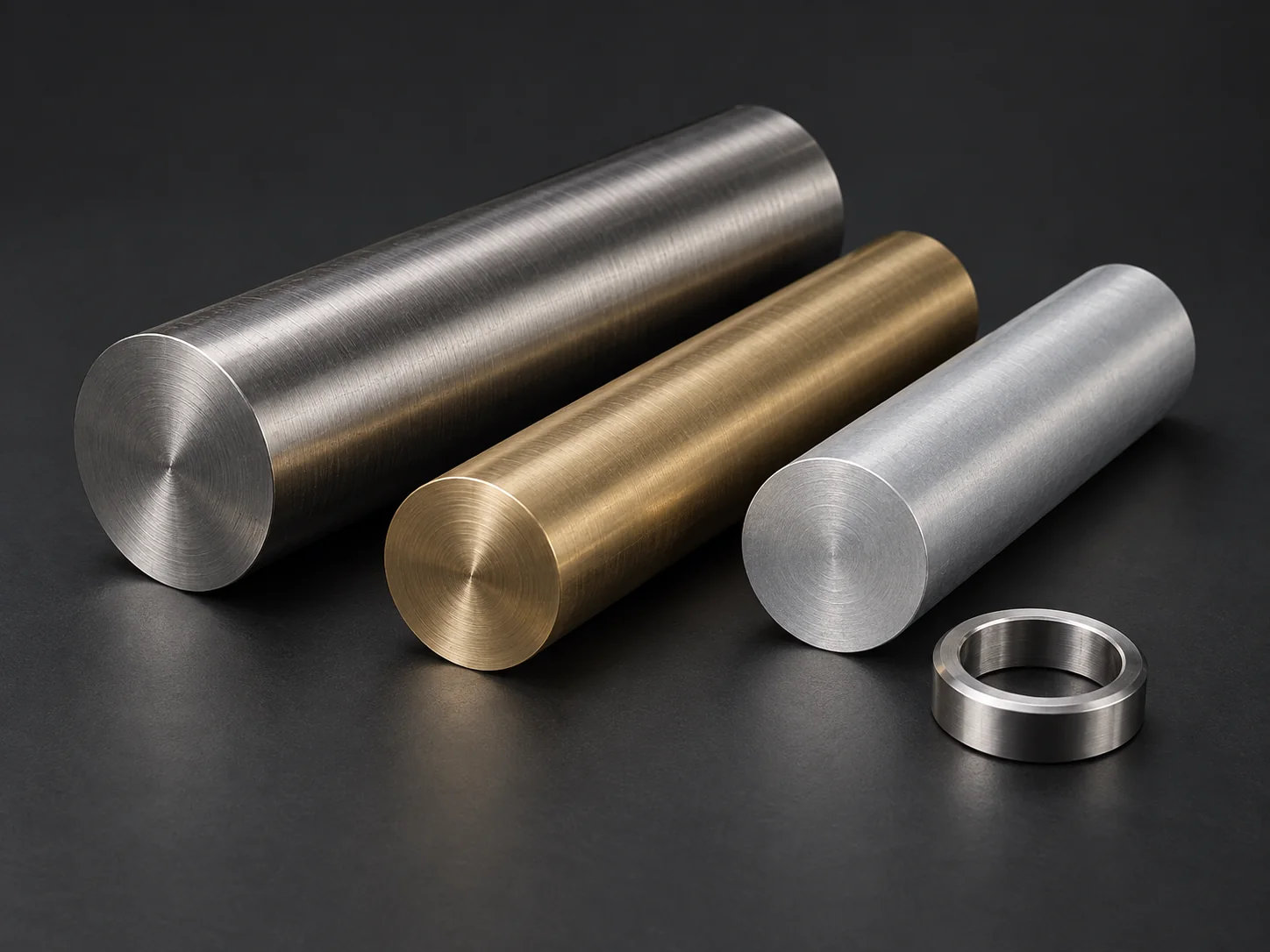
A material certificate is useful only when its scope matches the purchase requirement and its identity can be connected to the supplied parts. State the material designation, product form, delivery condition and applicable specification. Then agree the document type and required reported properties. BSI's EN 10204 overview distinguishes types of inspection documents for metallic products; an order should identify the applicable requirement rather than treating every supplier declaration as equivalent. Do not infer a document level from a catalogue photograph.
Map the identities from raw stock to finished lot
A mill heat number, a supplier delivery batch, an internal stock reference and a machining lot can identify different things. Ask how the relationships will be retained when a bar is cut, remaining stock is returned or one job uses more than one incoming batch. Outokumpu explicitly includes documented material traceability in its supplier requirements. For a machined-part RFQ, turn that principle into an agreed record chain that receiving inspection can follow without guessing which certificate belongs to which box.
Keep PMI within the limits of the chosen method
Positive material identification can help check alloy chemistry against an agreed requirement. Thermo Fisher describes PMI using elemental analysis, with different instruments serving different applications. A grade match does not automatically establish tensile strength, hardness, heat-treatment condition, corrosion performance or every element required by the specification. Define the method, elements, sample preparation and acceptance basis before requesting PMI. If a mechanical property or treatment record is required, list that evidence separately. This article does not imply that a particular analyser or laboratory is available at Chengshuo.
Keep later processing and document changes visible
Machining, heat treatment and surface finishing may generate separate records. Identify which records must accompany the finished lot and how subcontracted operations remain linked to it. If a certificate is missing, illegible or inconsistent with the stock label, hold the material for resolution rather than recreating test values. An authorised correction should preserve the document's origin and revision history. Agree retention and permitted customer redaction in advance; redaction must not remove the identifiers needed to understand the delivered lot.
Illustrative example: a shaft order using two incoming batches
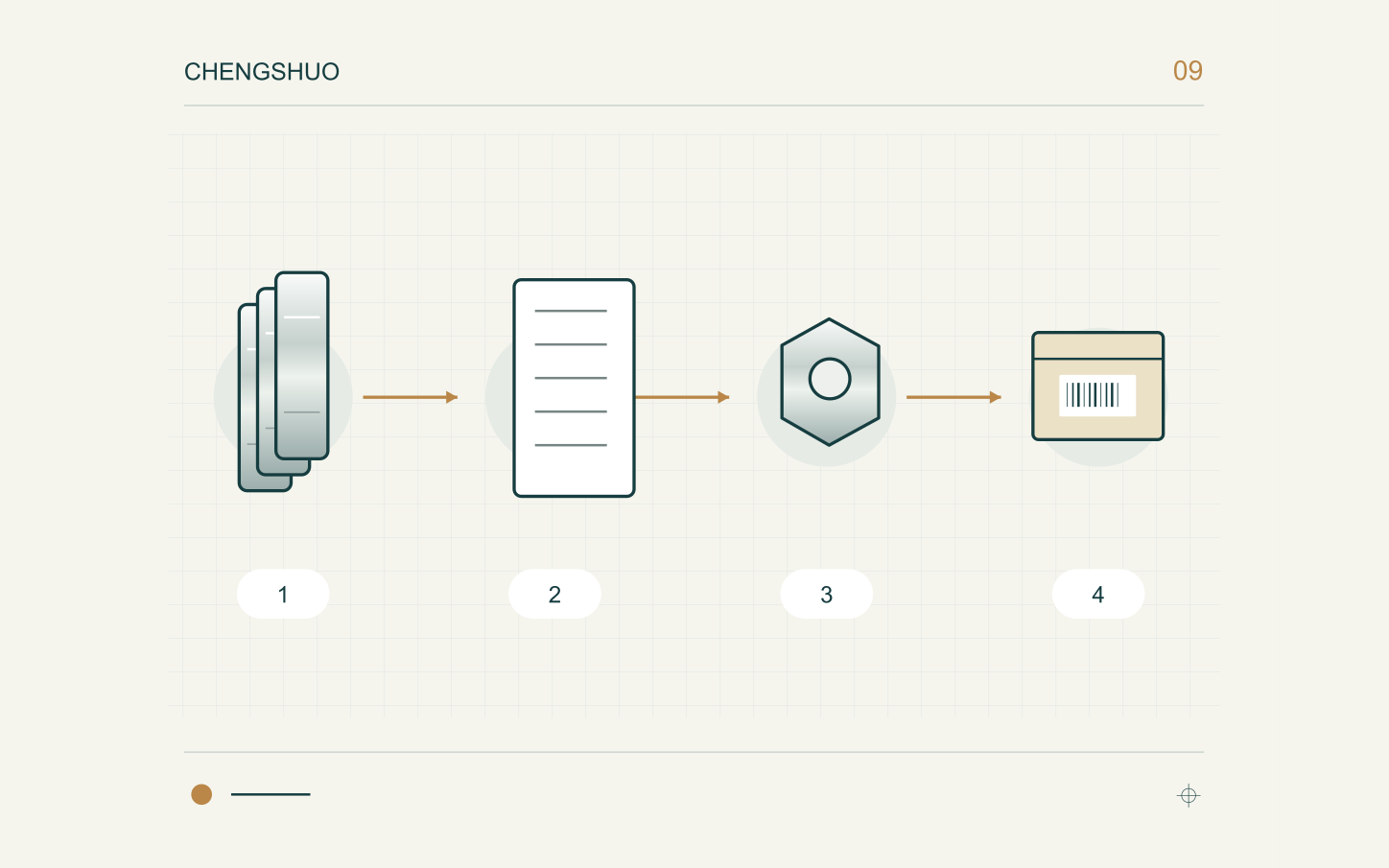
Imagine a shaft order using stock labelled H-A and H-B. These are fictional identifiers, not real heat numbers. The planning record links each incoming batch to its original evidence, the machining job and separately identified finished lots. A partial shipment retains those links even when quantities are repacked. The buyer can then ask which delivered pieces are affected if one material record is questioned. No certificate, test value or actual delivery is reproduced here; the example shows the relationship the purchasing team should request.
Put the traceability request into the purchase scope
Send the following requirements with the drawing so document availability and any additional verification can be reviewed before material is purchased. Chengshuo can review the requested evidence scope for the particular component; inclusion and feasibility require confirmation.
- Material basis: grade, specification edition, product form, delivery condition and permitted substitutions.
- Document scope: certificate type, required properties, issuing source and any separately requested test report.
- Identity chain: incoming stock reference, heat or batch identity, job reference and finished-lot label.
- Batch changes: separation rules for mixed incoming batches, remnant stock, rework and split deliveries.
- Receiving review: document-to-label matching, missing-record disposition, retention and approved redaction boundaries.
FROM THE GUIDE TO YOUR PART
Put the checks into context.


References & further reading
- BSI — EN 10204 inspection document types

- Outokumpu — Supplier requirements and material traceability
- Thermo Fisher Scientific — Positive material identification
General planning guidance. Feasibility and acceptance criteria are confirmed against your drawing.