

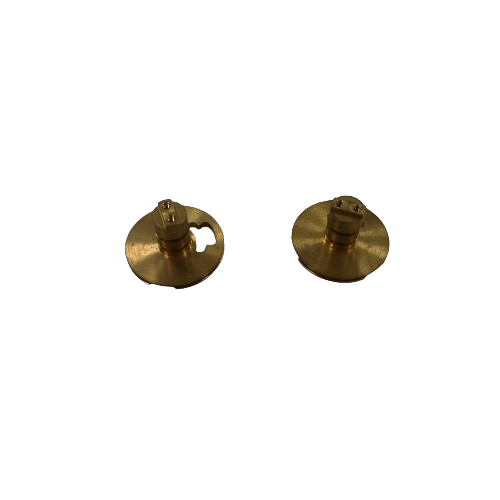
Component facts and reference
| Feature | Reference |
|---|---|
| Material | Brass |
| Component reference | Disc and central-stem forms |
| Machining reference | CNC machining; the product introduction names CNC milling |
| Visible features | Broad disc, projecting stem and a cutout on one reference form |
Specify the disc, stem and mating-seat relationship
Start with the role of each contact surface in the assembly. Identify the disc face that meets the mating part, the stem section used for guidance and the feature that establishes orientation. Provide the counterpart geometry needed to understand the interface. Where an opening or cutout matters, show its location relative to the drawing datum.
The photograph brings two component forms together within the published reference. Select the form relevant to your enquiry and attach its own controlled drawing. Define the disc profile, stem dimensions and important edge conditions there. If several alternatives are to be quoted, distinguish them with separate drawing or version identifiers rather than combining their requirements.
Keep the brass specification and supplied scope clear
The source title, product description and matching material field identify brass. Its introduction names CNC milling; the exact manufacturing scope for your own geometry is reviewed with the drawing. State the brass designation, required material documentation and any approved alternatives. Identify the delivered surface condition and any separately requested additional operation.
Describe what the supplier is being asked to deliver: the machined component, a matched component set or separately agreed assembly work. For a valve application, provide the project requirements for the seat, guide and other mating parts. Any application test should have its own procedure, conditions and acceptance rule within the requested scope.
Agree inspection around the component interfaces
Mark the dimensions that determine fit and movement in the assembly. These may include a guiding diameter, disc-to-stem relationship, contact-face geometry or cutout orientation. Define the measurement datum and condition, and state which results you need documented with samples. If a mating part or gauge is supplied by the buyer, describe its purpose and availability.
Separate component measurements from tests of a complete valve or installed system. Identify who approves the assembled function and the documents required for that decision. Keep sample changes under revision control, including any alteration of the seat relationship, guide clearance, material or finishing. The agreed drawing and inspection scope should remain linked to the sample approval.
Prepare quantities, protection and the enquiry brief
Provide sample quantity, first order quantity, delivery destination and target timing with the drawing. Identify the disc edges, stem ends and contact faces that need protection during handling and delivery. State the part identification and batch reference required on packaging or inspection documents.
Use the enquiry link to carry this brass component reference into the request. Share only authorised drawings and arrange an NDA first if required. Add the actual material, mating geometry, critical requirements and requested records so the quotation can define the machining, additional operations, inspection and delivery scope for your selected component.
Related components and enquiry resources
Questions before ordering
What components are shown in the photograph?
Two brass reference forms have broad discs and central projecting stems; one disc includes a cutout. They are shown together in the company’s check-valve product reference.
Which brass grade is specified?
The source identifies the material family as brass. State the grade and material standard required for your own drawing in the enquiry.
What should I define for the mating interface?
Show the disc contact face, guide section, drawing datum, mating-seat geometry and any cutout orientation that controls assembly.
Is a complete valve test part of this component enquiry?
Describe any required valve or system test separately, including procedure and acceptance rule. Its scope must be agreed for the actual project.
Which machining process is referenced?
The company introduction names CNC milling and the product is listed as CNC machined. Actual operations follow the reviewed drawing and agreed supply scope.
What should accompany the RFQ?
Include the selected drawing revision, material, sample and order quantities, mating requirements, requested inspection records, destination and timing.