

Define the part before comparing suppliers
A useful enquiry describes the component you want to buy, rather than asking for a general brass machining price. Send the latest drawing revision, the intended material designation, sample quantity and first production quantity. Identify the surfaces that locate the part and the features that must match another component. This lets the drawing review focus on the geometry and acceptance requirements that determine the proposed manufacturing route.
For turned brass parts, the relationship between the bore, outside diameter and seating face often matters more than the external appearance. Mark the drawing datum and the dimensions that control assembly. Include thread details, recesses or cross-holes when present. A model helps explain the shape; the controlled drawing should state the dimensions and requirements used for approval.
Use real brass references to explain your requirement
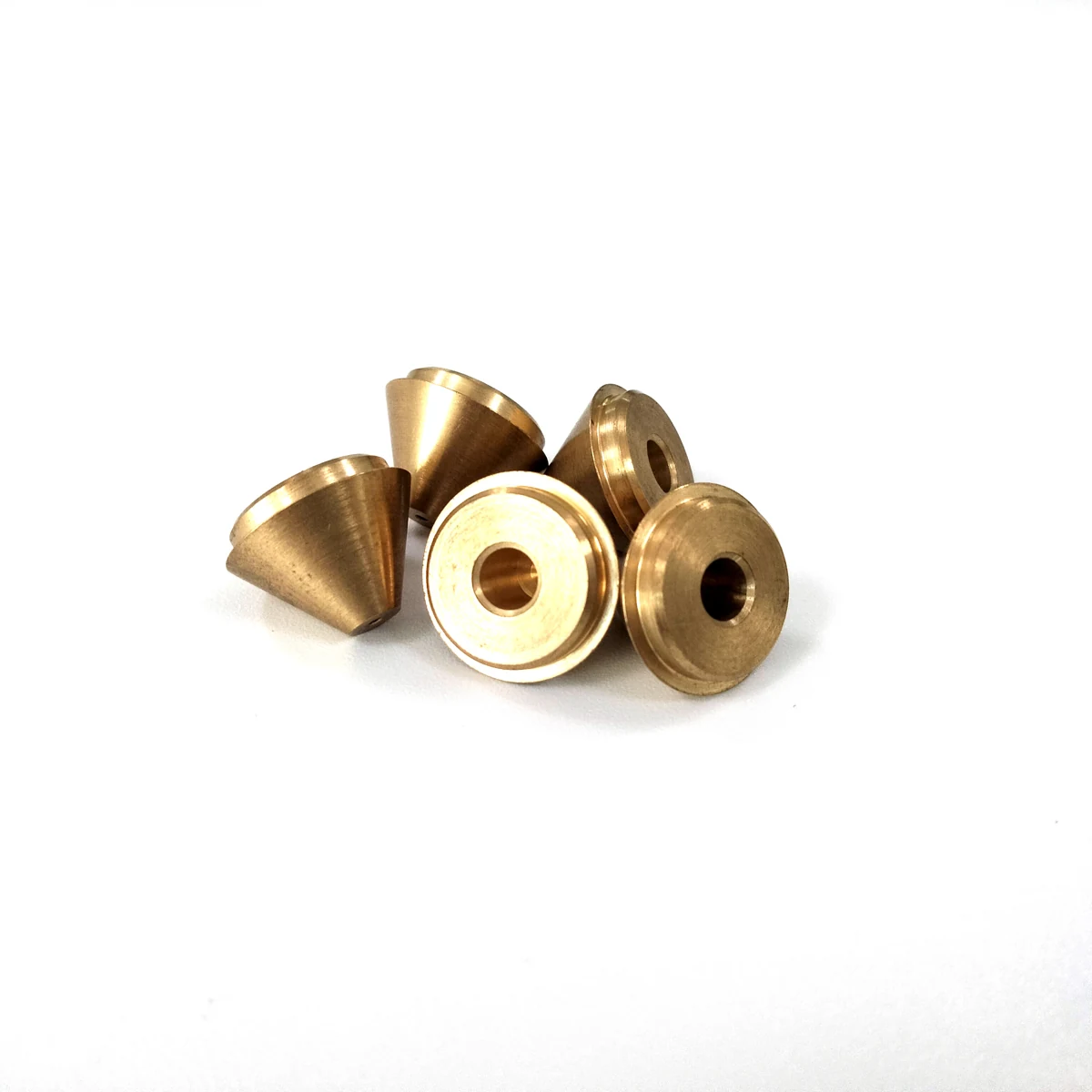
Our brass cone-nozzle reference shows tapered bodies, central openings and circular shoulders. It is a CNC-turning example for discussing a rotational part with a bore and a seating interface. In your enquiry, distinguish the flow opening from the locating diameter and identify the shoulder that contacts the mating component. If the finished assembly needs a functional test, describe the test conditions and acceptance rule in the purchasing documents.
The brass pipe-sleeve reference adds cylindrical and flanged forms. It is useful when discussing a sleeve length, bore relationship or end face. The slotted-washer reference covers a different, flat ring geometry. These are separate product references within brass machining; choose the nearest one to communicate the shape, then use your own drawing to define the item being purchased.
Specify the material and surface condition
Write the required brass designation and the applicable material standard on the enquiry. Where a drawing permits an alternative, identify the approval route before requesting a substitution. Keep the material specification separate from the appearance of the sample. If composition or material documentation forms part of acceptance, state which document is needed and which delivery or batch it should identify.
Describe the finished surface and any functional areas that need special attention. State whether a coating is required, which areas must be masked and whether the fit is assessed before or after finishing. For fluid-contact or electrical uses, include the relevant application requirements for review. Material suitability, coating scope and any additional verification belong in the agreed project specification.
Agree inspection, quantities and delivery scope
Highlight the few characteristics that determine whether the part can be assembled and accepted. Request a record format that identifies the drawing revision, measured feature and sample or batch reference. If a mating component or gauge is needed for acceptance, describe how it will be supplied and used. Distinguish dimensional inspection from an assembly or functional test.
Separate approval samples from the first order and expected repeat quantities. Add your destination and required timing so the quotation can define its delivery scope. Ask for the proposed sample review and packaging arrangement alongside the part quotation. For a nozzle or sleeve, explain which bores, threads or contact faces need protection during handling.
Send a drawing-led brass parts enquiry
Use the enquiry link below to carry this material page into your request. Attach the drawing only when you are authorised to share it; agree an NDA first if needed. Add material, quantities, critical features and the required inspection documents. If you are comparing a catalogue item with a custom component, state whether interchangeability or a drawing-specific interface is the purchasing priority.
We can then review the submitted part requirements and agree the quotation scope. Keep changes under a clear revision so material, finishing and acceptance requirements stay together through sample review and the production order. The linked product pages and drawing checklist help you assemble that brief.
Reference parts and drawing resources
Procurement questions
Which brass parts are shown here?
The references are brass cone nozzles, pipe sleeves and slotted washers from Chengshuo’s published machining catalogue. The nozzle source explicitly identifies CNC turning.
Can I specify a particular brass grade?
Include the designation and material standard in your enquiry. The grade and any permitted alternatives must be reviewed and agreed for the actual drawing.
What should a turned-part drawing include?
Provide the revision, units, datums, bore and outside dimensions, shoulders, threads and critical fits that apply to your component.
How do I request a nozzle functional test?
Describe the intended test, conditions and acceptance rule separately from dimensional inspection so the proposed scope can be reviewed.
Can I request material and inspection records?
State the required document type, batch identification and characteristics to report before quotation and sample approval.
How are price, quantity and timing confirmed?
Send sample and order quantities, material, drawing and destination. Price, delivery timing and the accepted manufacturing scope are defined in the project quotation.