
 4 min read
Write four requirements instead of one finish label
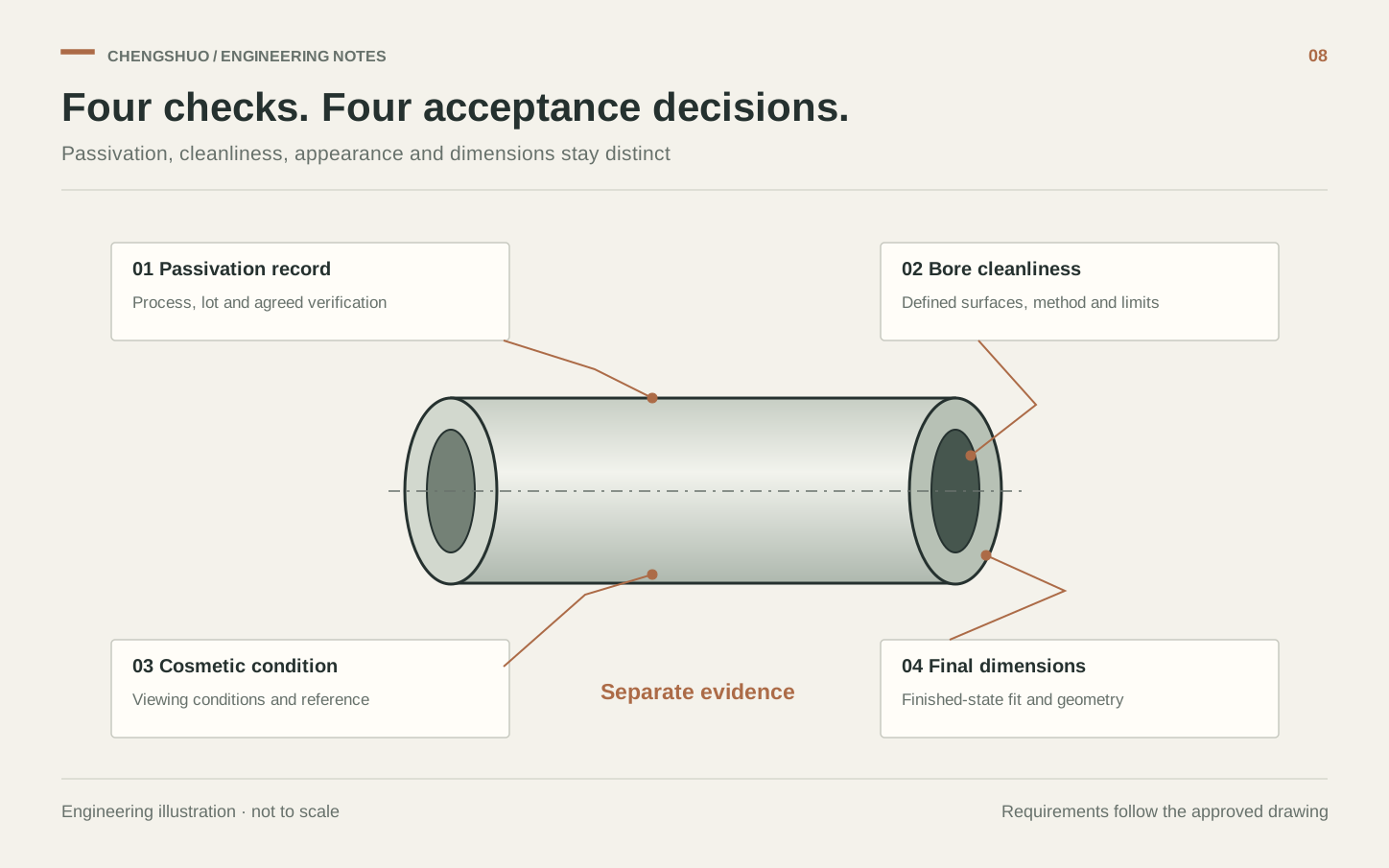
A purchase order saying clean, bright and passivated combines requirements that need different evidence. Passivation concerns the stainless surface and its specified treatment verification. Cleanliness may concern particles, residue or contamination inside a passage. Appearance covers visible marks and consistency. Dimensions still determine whether the part fits. Give each requirement a defined acceptance method and delivery condition. This matters particularly for small sleeves, valve components and sensor housings, where a clean-looking exterior can leave the internal surface unevaluated. Begin by marking which surfaces actually affect the customer's assembly or service.
Treat cleaning as part of the process route
Carpenter Technology explains that shop contamination and free iron can compromise a machined stainless surface, and that grease and coolant must be removed before effective passivation. It also discusses different considerations for free-machining grades. The purchasing implication is to specify the exact alloy and the approved process rather than treat all stainless steel alike. Ask how blind features and small passages will be cleaned, rinsed and dried. That review does not require the buyer to prescribe a chemical recipe; it requires agreement on the process specification, part geometry and final condition.
Ask what the passivation result actually demonstrates
ASTM A967/A967M describes alternative treatments and tests intended to confirm treatment effectiveness, particularly regarding free iron and other extraneous matter. Its scope does not recommend a grade, treatment or acceptance criterion for every application. Name the contractually required specification and revision, then agree the applicable verification and lot definition with the processor. A process certificate and a test report are different documents; state which is required and link it to the supplied batch. Do not substitute a generic salt-spray claim for an unspecified service-life requirement or demand every listed alternative test by default.
Set separate boundaries for residue, appearance and size
If particles can affect a valve seat or sensor passage, identify the surfaces to be evaluated, extraction or examination method, reporting units and limits. Agree the sampling and packaging state in which the check is performed. For appearance, define viewing conditions, relevant surfaces and acceptable marks, using approved reference images where helpful. A polished look is not a passivation test. Likewise, a treatment record does not release the thread or bore. Specify final dimensional acceptance after all required processing and ensure any subsequent machining or rework triggers a review of the affected surface treatment.
Example: a stainless sleeve with an internal passage
Consider an illustrative stainless sleeve for a fluid-sensing assembly. The buyer needs a specified passivated surface, controlled particles in the bore and an acceptable exterior finish. Three line items make the order clearer: the approved passivation treatment and verification, a defined internal-cleanliness check, and a cosmetic reference for the visible face. Thread and bore measurements remain on the final dimensional report. This structure avoids rejecting a conforming part because an unstated gloss expectation appeared at receiving, or accepting it solely because the exterior is shiny. It also tells the supplier which evidence and protective packaging to include.
Request a finish-and-cleanliness review
Send Chengshuo the alloy, drawing and delivery-condition requirements before asking for a passivation quotation. We can review the machining interfaces and identify processing questions that need agreement. Confirm the finishing scope and required records in writing before releasing the order.
- Name the exact alloy and approved passivation specification and revision.
- Agree the verification method, batch identity and required treatment records.
- Define particle or residue limits and the surfaces and method they cover.
- Separate cosmetic criteria from final dimensions, threads and surface texture.
- State handling, drying, rework and packaging requirements after processing.
FROM THE GUIDE TO YOUR PART
Put the checks into context.


References & further reading
- Carpenter Technology — Passivating stainless steel parts

- ASTM — A967/A967M-17 scope and alternative verification tests
General planning guidance. Feasibility and acceptance criteria are confirmed against your drawing.