
 4 min read
A slotted collet needs a stated measurement condition
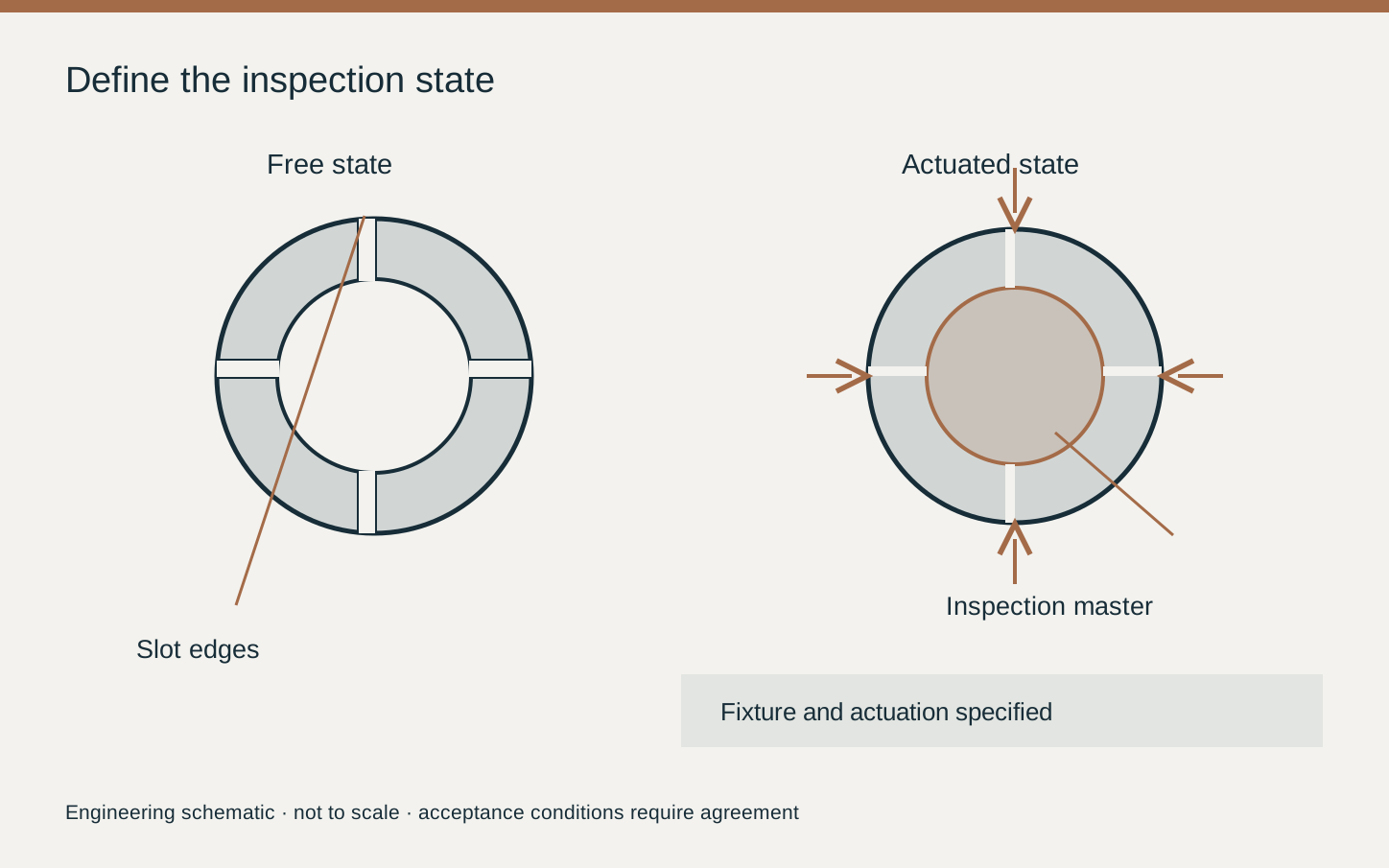
For a custom slotted collet or gripping sleeve, the contact diameter is incomplete without a condition. Is the drawing dimension measured with the component relaxed, seated in a taper or actuated around a specified master? Those states can produce different readings while describing the same part. Put the required condition beside the relevant feature. Keep a free-state dimensional requirement distinct from a functional gripping check so the supplier does not have to infer the intended acceptance method.
Connect slots, flexure and the contact surface
Slot count, width, length and end geometry define the separated segments, while the remaining section influences their movement. Review these features with the mating taper or actuator and the surface that contacts the workpiece. Do not extend slots or remove material as a machining convenience without design approval. Hardinge workholding guidance illustrates why gripping range and actuation belong to a particular system. A custom component cannot inherit the operating range or load rating of a visually similar catalogue collet.
Define the final material and processing sequence
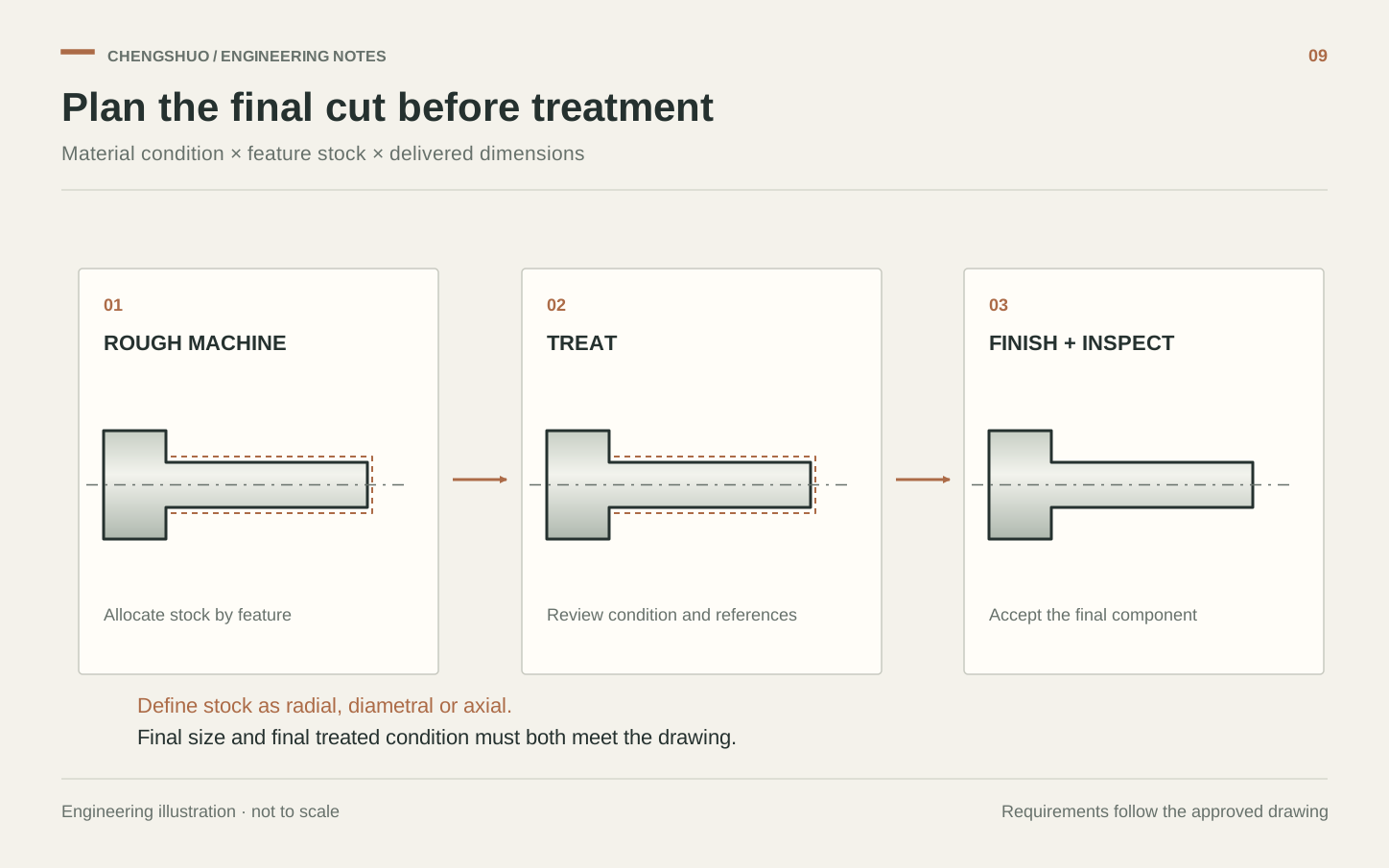
State the material grade and final condition, including any heat treatment or surface process. Ask which features will be completed before slotting and which will be verified afterward. Releasing material or changing its condition may alter geometry; the important purchasing decision is which final state the drawing accepts. If a slot is produced by an electrical discharge process, agree whether the application requires additional surface treatment. The appropriate sequence depends on the actual geometry and service requirement, not a universal recipe.
Inspect slot edges without changing their function
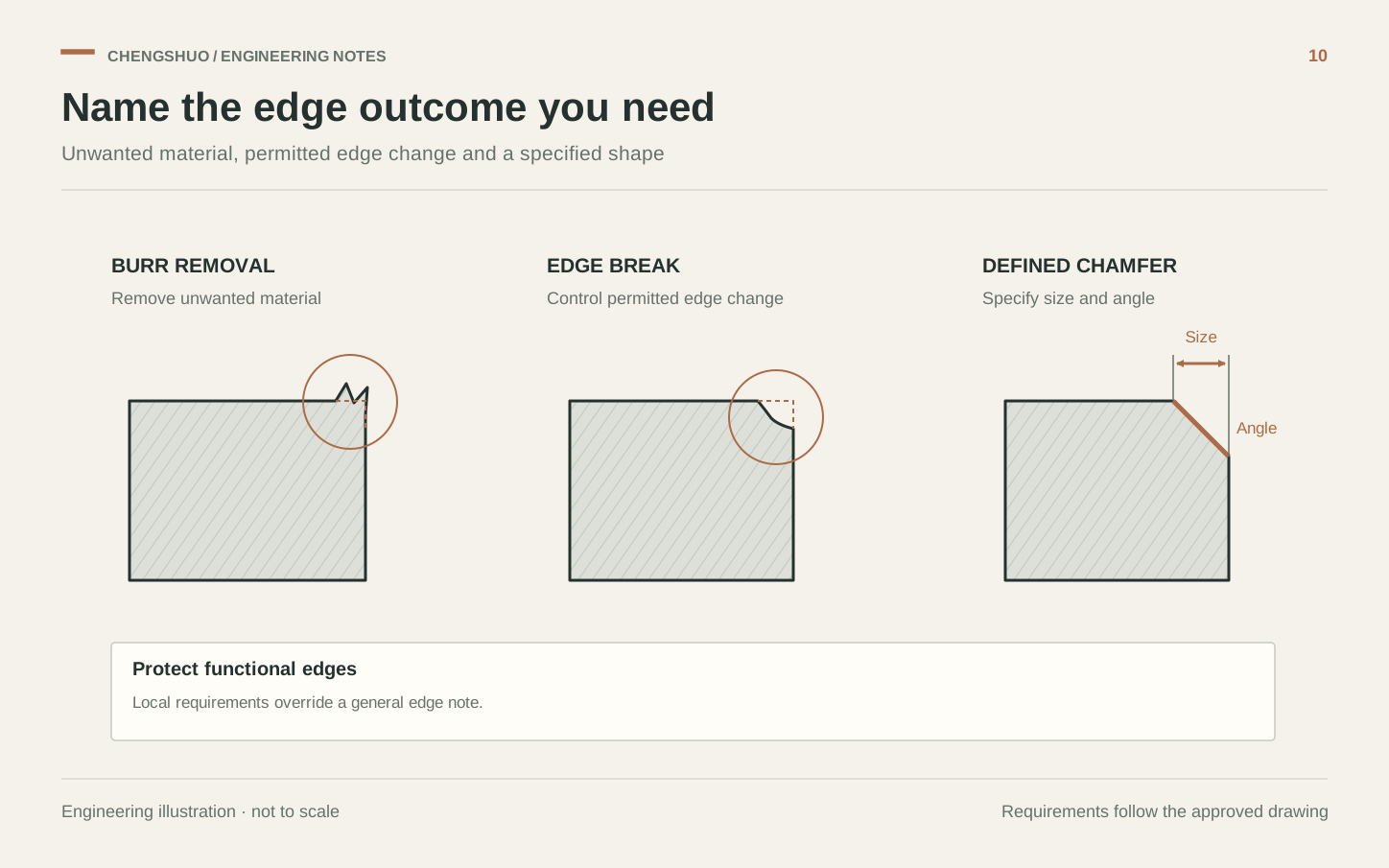
Burrs at slot mouths or inside the bore can obstruct movement, mark a mating component or invalidate a contact check. Specify the permitted edge treatment and protect the intended gripping surface. Avoid an open instruction to polish everything: rounding a functional edge or enlarging a slot may change the design. Include access for inspection and cleaning in the review. A photograph of a clean outer surface does not establish that the internal slot intersections meet the agreed acceptance criterion.
Make the loaded inspection fixture reproducible
If acceptance includes an actuated condition, define the master diameter, seating references, actuation method and controlled load or displacement. Identify where the reading is taken and whether the check concerns contact, runout, movement or a dimensional limit. Use the same agreed fixture definition for supplier samples and incoming inspection. Do not force a relaxed component into an unspecified fixture and compare that result with a free-state drawing limit. A gripping trial also needs its own release criteria and safety review.
What to include in the machining enquiry
Send Chengshuo the component and mating assembly drawings. The review should establish which geometry can be inspected directly and which behavior requires an agreed functional setup.
- Free-state dimensions and clearly identified loaded-state requirements.
- Slot geometry, edge limits, material and final treatment.
- Mating taper or actuator definition and allowed travel.
- Inspection master, references, actuation control and measurement locations.
- Functional trial criteria and the authority approving any design revision.
FROM THE GUIDE TO YOUR PART
Put the checks into context.


References & further reading
- Hardinge — Sure-Grip expanding collet system and defined gripping range

- Hardinge — Custom workholding solutions
General planning guidance. Feasibility and acceptance criteria are confirmed against your drawing.