

Content updated on
Published reference details
| Property | Reference detail |
|---|---|
| Material | ABS |
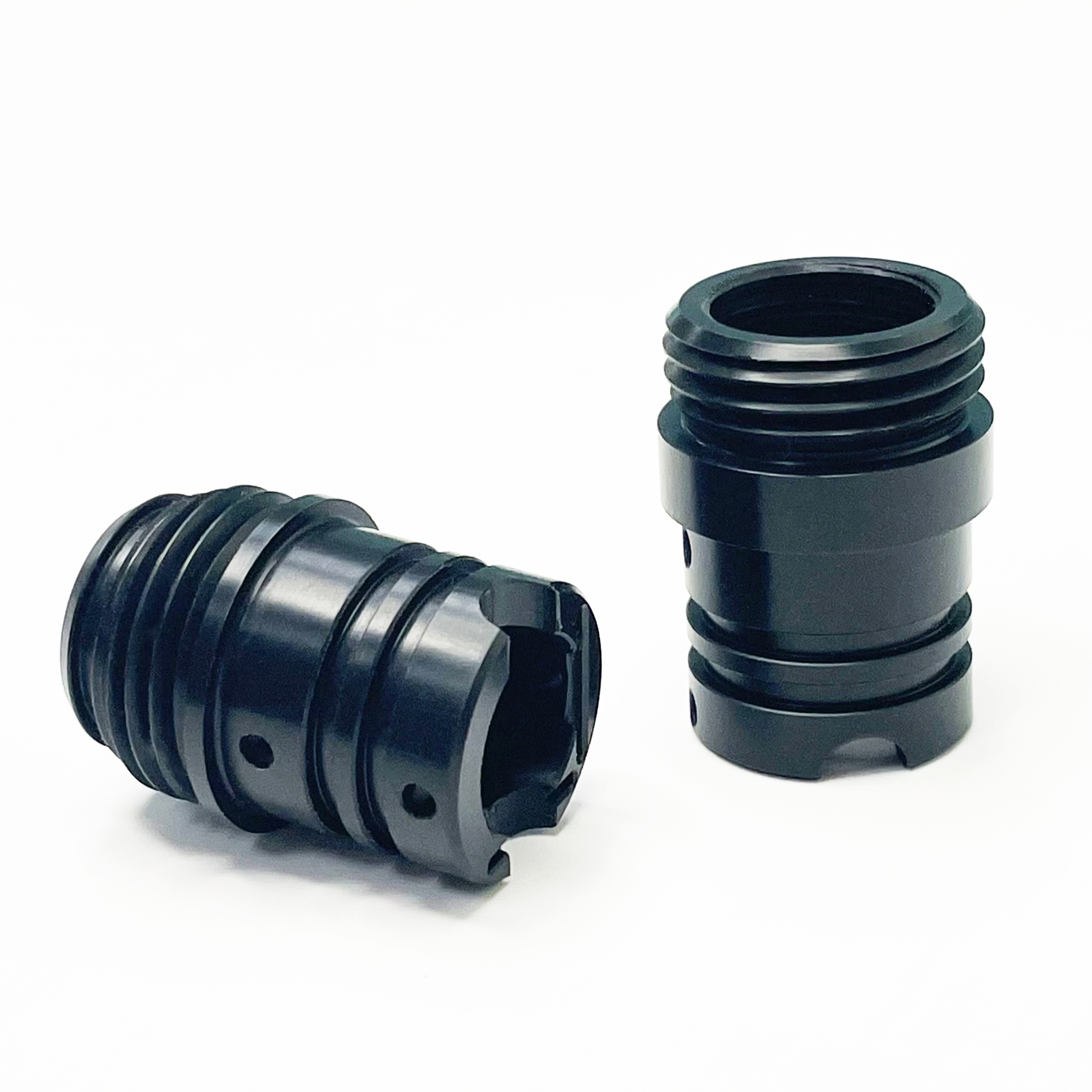
| Geometry | Stepped cylindrical body with central opening, external threaded features and lateral openings |
Start with the sleeve's complete mating relationship
The published reference brings several features onto one cylindrical component. A central opening runs through the body, while the outside combines stepped sections, threaded features and side openings. For a comparable enquiry, show the inside profile and outside interfaces on the same controlled drawing. Identify which surfaces locate the sleeve and which surfaces provide clearance or access.
Include an assembly view when the surrounding parts explain how the sleeve is installed. Name the mating component and its revision, and state whether it is supplied for an agreed sample check. This lets the drawing review connect each important feature to its purpose without making assumptions about the rest of the assembly. Use separate drawing identifiers when you need several variants.
Specify the required ABS grade and delivered condition
The manufacturer identifies the reference material as ABS. In your enquiry, provide the exact ABS designation and the condition required by your design. State any colour or appearance requirement together with the surfaces to which it applies. If material documentation is needed, identify the document and the way it should be associated with the ordered part.
Keep material selection separate from the component's dimensions and assembly acceptance. Give the supplier the requirements your project needs to meet, then request a proposed manufacturing and delivery scope for that drawing. Any requested finishing, marking or packing should be included in the quotation review. This creates a clear basis for purchasing the intended variant.
Define threads, shoulders and installation access
Give every required thread its complete designation and the engagement length needed by the mating part. Distinguish a threaded area from a groove, relief or plain locating surface in the section view. Mark the shoulder or end face controlling axial seating so the review can relate the thread to the installed position rather than treating each feature independently.
Show the space available for installation and any required orientation of flats or notches. Identify the edges that the installer will contact and the agreed edge condition. If the sleeve is tightened or retained with another component, describe that arrangement in the enquiry and specify the assembly checks required for sample approval. Keep functional loads and acceptance decisions with the responsible design team.
Locate lateral openings relative to the functional features
Dimension the position of each lateral opening from the selected axial reference. Where an opening needs to align with another feature, show the required angular relationship and name the reference used for it. A view of the complete interface helps distinguish an opening used for access from a feature that must register with a mating component.
Include the internal intersection and any affected edges in the checking scope. State the required bore profile and the part condition in which its requirements apply. If a mating piece is used during a trial assembly, give it an identifier and an agreed task. This keeps the geometric inspection and the assembly check connected to the same drawing revision.
Agree a sample record that follows the drawing
Number the critical characteristics and identify the records expected for the first sample review. Typical enquiry topics are the locating bore, seating face, thread requirement and position of lateral openings. Select the actual limits and acceptance rules in your own drawing and inspection agreement. The supplier can then quote the requested checking scope alongside the component.
Record the sample identity, drawing revision and agreed condition together. Resolve open requirements before the order is released and keep any changes under revision control. For a repeat enquiry, send the approved drawing and the required quantity options rather than relying on an earlier photograph or an informal part nickname. That makes the requested scope easier to compare.
Send a quotation request for your sleeve variant
Provide the drawing, ABS designation, sample requirement and later quantity options. Add the mating-part information, requested surface condition and any documents required with the parts. Mark unresolved questions so they can be addressed during the technical review. A clear request separates the component itself from supplied mating items, additional checking and packaging requirements.
Use the links below to review the related thread and bore questions, then send your own requirements to Chengshuo. Ask for the proposed route, scope and commercial terms to be based on the controlled drawing. Keep the approved technical scope with the purchasing record so subsequent orders continue from the same agreed sleeve configuration.
Define these requirements in your enquiry
| Item | Specify in your drawing and enquiry |
|---|---|
| Material | Exact ABS designation and any required material documentation. |
| Bore and seating | Inside profile, outside locating surfaces and the axial seating reference. |
| Threaded areas | Thread designation, engagement and required checking scope. |
| Side openings | Axial location, clocking relationship and internal edge condition. |
| Sample approval | Characteristic numbers, agreed part condition and any identified mating piece. |
| Order scope | Sample and later quantities, requested finishing, marking, packing and records. |
Questions before your enquiry
What material is named for this reference?
Chengshuo's published reference identifies ABS. Specify the exact ABS grade, appearance and documentation required for your own order.
What should I send for an ABS sleeve enquiry?
Send the drawing and revision, material designation, quantity options and mating-part requirements. Mark the bore, seating surfaces, threaded areas and side openings.
How should the thread be specified?
Give its complete designation, required engagement and relationship to the seating surface. Include the agreed check or record needed for sample approval.
How do I describe a lateral opening?
State its axial location and any angular relationship to a named feature. Show the internal intersection and the required condition of affected edges.
Can a mating component be included in the sample review?
Identify the component and agree its role, assembly condition and acceptance rule before the sample check. Keep that trial separate from individual geometric results.
How do I request samples and repeat quantities?
List the sample requirement and later quantity options separately. Use the same controlled drawing and agreed technical scope for the quotation.