

Start with the component and its mating interfaces
For an acrylic machining enquiry, describe what the part must fit, support or cover. Send a dimensioned drawing with a revision and an accompanying model where available. Identify the surfaces that locate against another part, the openings that provide access and the cavities that determine internal clearance. This provides a more useful quotation basis than a request for a transparent part of approximately the same shape.
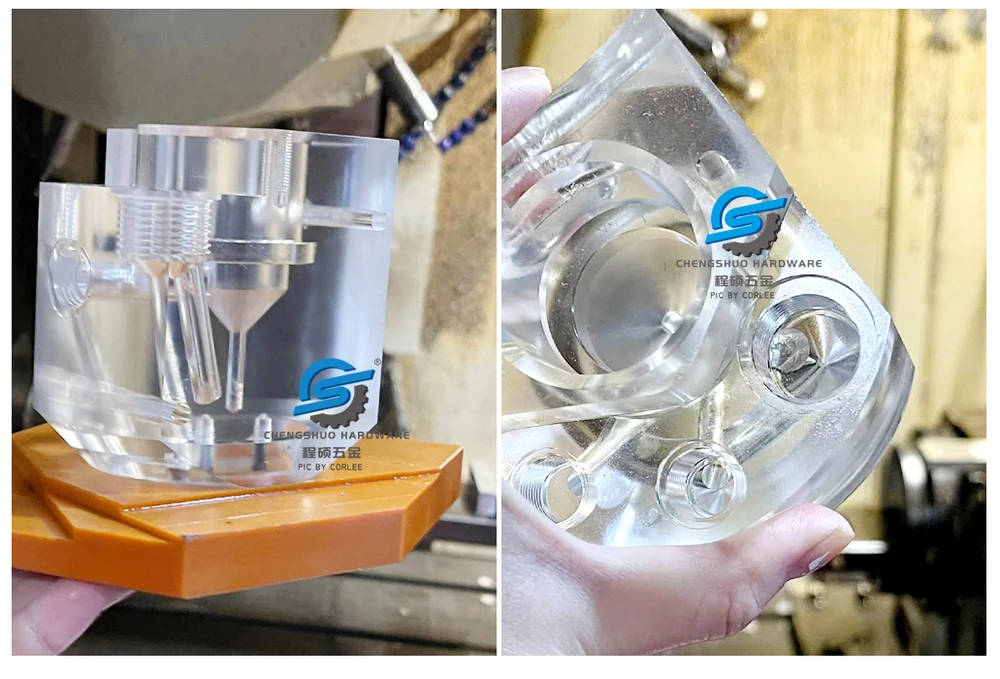
The Chengshuo reference is published as an acrylic PMMA holder and container cover made by CNC machining. Its original views show internal cavities, surrounding openings and threaded features. Use the example to explain the component form while supplying the actual dimensions, material requirement and acceptance criteria for your own project. A part reference and a controlled purchasing drawing serve different purposes in the enquiry.
Make thread, contact and cavity requirements visible
Put thread designation, depth and the required mating condition on the drawing. Identify which surface controls the thread location and which face contacts a mating part. For a cover, show how the component is positioned during assembly and whether a separate fastener, insert or mating cover is included in the requested supply.
Define the cavity profile and the clearances that matter to installation. Include sections where an internal step, recess or opening would be difficult to interpret from an outside view. Mark the edge condition needed at handled or assembled features. If a particular assembly check is required, provide the relevant mating-part information and describe the condition in which the check should take place.
Specify the acrylic material and visual acceptance
Write PMMA or the required acrylic specification explicitly, together with any designated grade or supplied-material requirement. If an alternative polymer is under consideration, identify it as a separate quotation option and describe the approval decision needed. Keep the material choice linked to the actual application requirements and the controlled drawing revision.
Where transparency or appearance matters, identify the viewing faces and the inspection method. Explain whether the requirement concerns a visible surface, the view through a cavity or a mating-contact area. Provide an agreed sample reference or other acceptance basis when available. State any additional surface work you are requesting as a separate item to review, alongside the geometric requirements.
Keep application checks and dimensional inspection distinct
List the dimensions to report with samples, using the drawing datum and a clear feature description. Separate those measurements from cosmetic review and from any test of the assembled device. If the application includes media contact, a sealing interface, cleaning conditions or another qualification requirement, provide its specification and acceptance rule for review.
Describe the assembly load or fastening arrangement where it affects the part requirements. State how a sample will be installed and who approves the result. Record any change to a thread, cavity or contact surface under a revised drawing, and agree which checks must be repeated. This gives purchasing and inspection a shared basis for comparing samples and releasing an order.
Include handling, quantities and documentation in the RFQ
Identify surfaces to protect during handling and delivery, especially where the appearance decision depends on a clean viewing area. Describe the required separation, wrapping or identification of parts. Keep part number, revision and batch reference consistent with the inspection documents you request. Packaging requirements should be reviewed with the component scope before ordering.
Send sample and first-order quantities separately, with the drawing, material specification, delivery destination and target timing. The enquiry link carries this PMMA page into your brief. Attach only drawings you are authorised to share and arrange an NDA first where needed. The quotation can then define the agreed machining, additional operations, documentation and delivery scope for your actual component.
Reference parts and drawing resources
- Acrylic container cover
- PMMA thread and contact review
- Plan part acceptance
- Machining capabilities
- Prepare your drawing package
Procurement questions
What acrylic component is the reference?
The reference is Chengshuo’s published acrylic PMMA holder and container cover. The source identifies CNC machining, and the photos show cavities and surrounding openings.
Which drawing details matter for a cover or holder?
Identify the revision, mating faces, locating features, cavity clearances, openings, threads and edge requirements needed for assembly.
How should I specify visual acceptance?
Mark the viewing surfaces and provide the inspection method or agreed sample reference. Keep cosmetic requirements separate from dimensional inspection.
Does the component enquiry include a sealing or device test?
Describe any required application test, conditions and acceptance rule separately. Its scope must be reviewed for the actual project.
Can I request a particular PMMA material?
Provide the required specification and any designated grade. Alternative materials and additional surface operations should be identified and agreed before ordering.
What is needed to obtain a quotation?
Send the drawing, material, sample and order quantities, critical features, inspection requirements, destination and target timing. The offer defines the accepted project scope.