
 4 min read
Define the purchase before comparing unit prices
A CNC machining quotation is meaningful only when its quantity and acceptance scope are clear. A prototype order may need process development, additional review or a different inspection plan from an established repeat batch. Start comparisons with the same drawing revision, material, final treatment and delivery requirement. Protolabs identifies geometry, material, quantity and lead time as pricing factors. Those factors explain why changing only the quantity in a spreadsheet does not always describe the manufacturing change behind a quotation.
Separate setup work from work repeated on each part
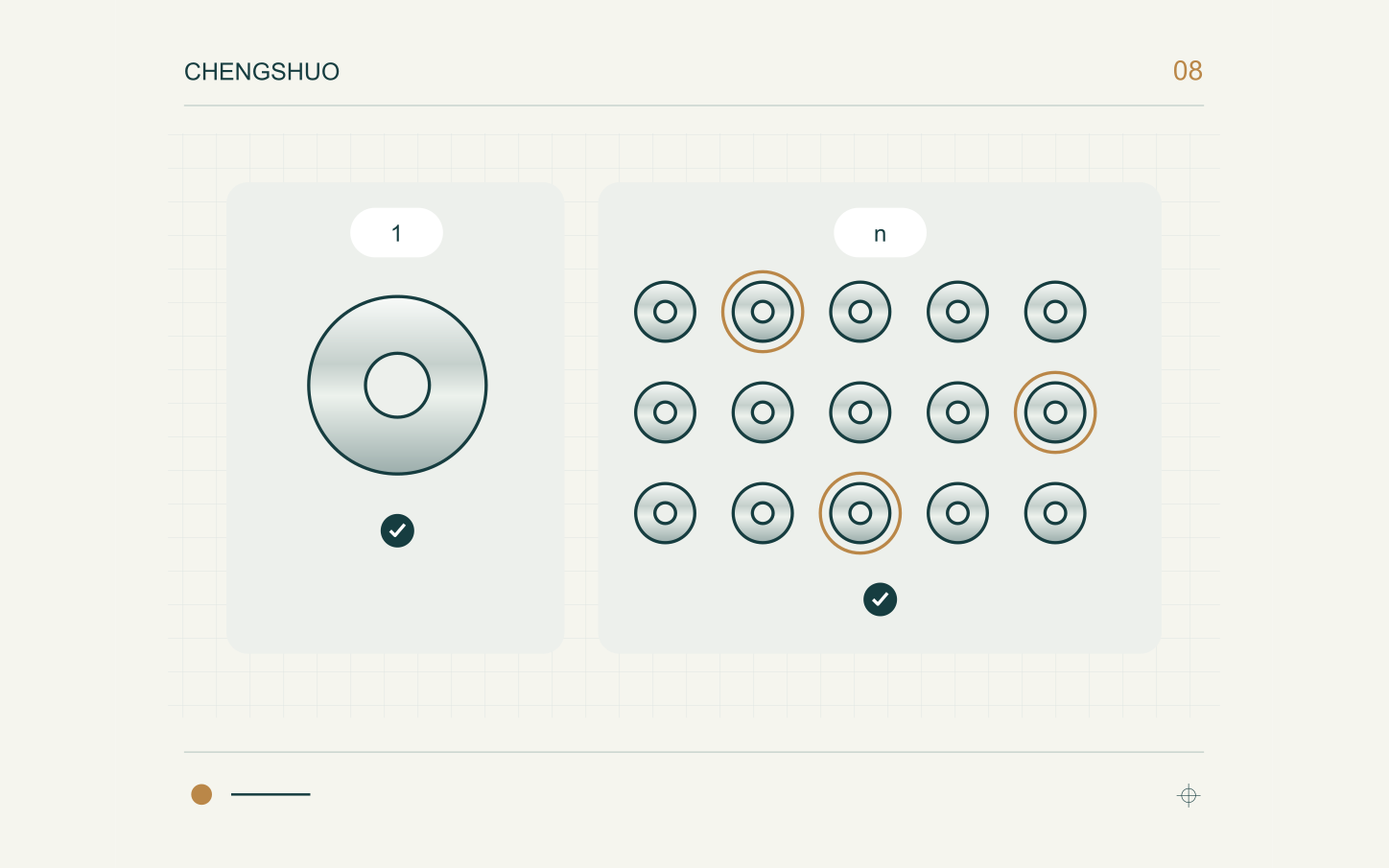
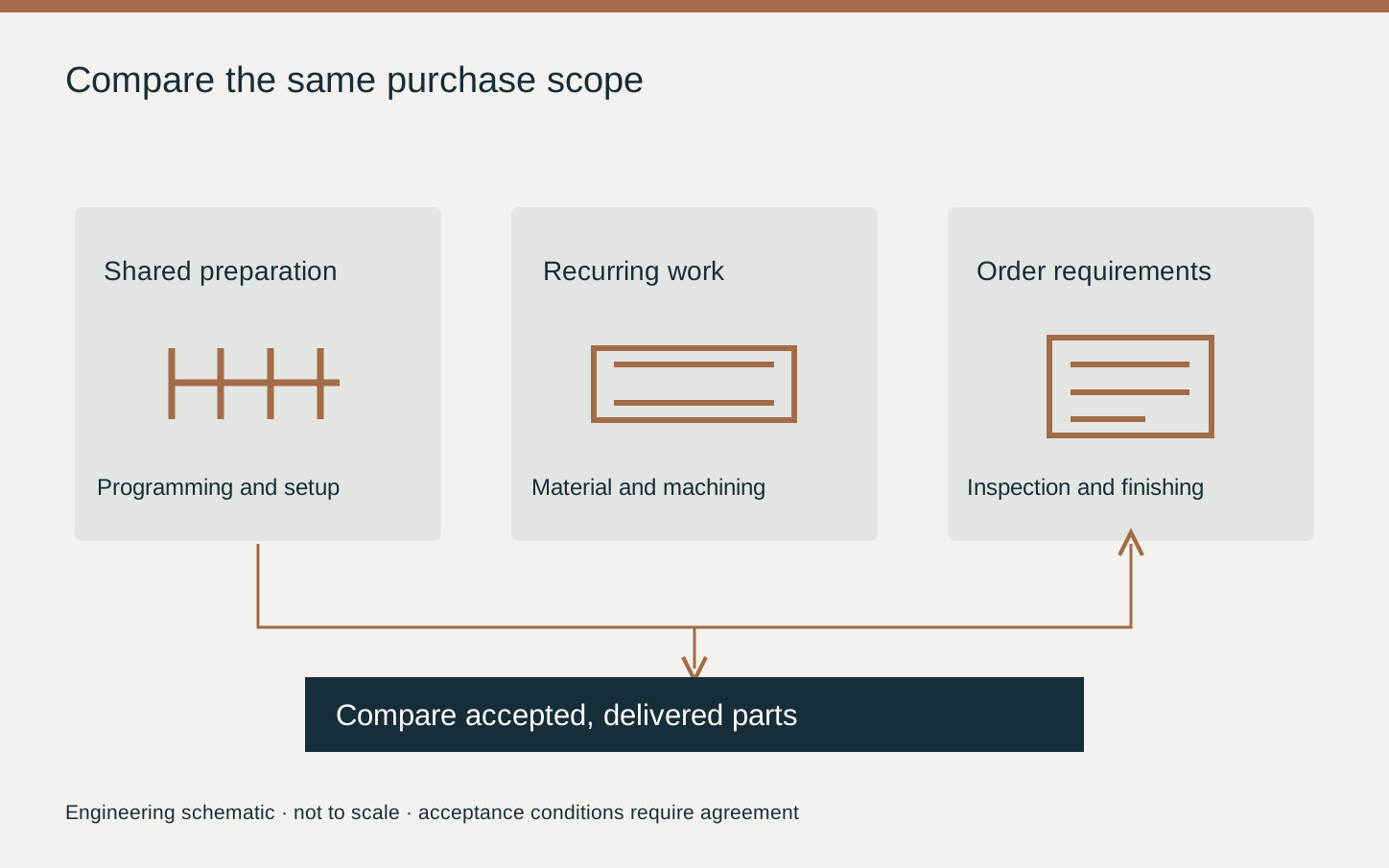
Programming, fixture preparation, tool setup and initial verification are activities that may be shared across a batch. Cutting, handling and some inspection activities recur as parts are produced. Ask the supplier how the quote treats these categories, without assuming every supplier invoices them separately. A larger batch can spread some preparation cost, but it does not remove material consumption or recurring checks. Nor does it guarantee a lower delivered cost if it creates excess inventory or avoidable engineering obsolescence.
Keep inspection and finishing visible
An apparently cheaper quote may omit a required inspection record, outsourced finish, masking operation or protective packaging. Define the characteristics that require individual results and the agreed sampling for other checks. Ask whether finish processing has a batch charge or a quantity-dependent route, and whether transport between operations is included. Compare accepted, delivered parts under the same scope. Removing a measurement or treatment is a design and quality decision, not an automatic saving that purchasing should infer from a lower number.
Request quantity scenarios that match real demand
Use a prototype quantity, a plausible initial release and a credible repeat quantity based on the purchasing forecast. Keep the technical scope fixed across those scenarios, or make changes explicit. Compare total cash commitment and delivery timing alongside unit price. If the design is still changing, ordering more parts merely to reduce an allocated setup amount may increase overall waste. A planned annual demand is useful context, but distinguish it from a firm order or an agreed release schedule.
Clarify what a repeat order can actually reuse
A repeat quotation may benefit from approved programs, fixtures and inspection arrangements, but their availability should be confirmed. Ask how a drawing revision, material change, long gap or different finish affects revalidation. Record ownership and retention arrangements for dedicated tooling where relevant. Reuse is not the same as skipping verification: the next batch still needs the controls agreed for its release. When a price changes, ask which scope or process assumption changed before interpreting the movement as a margin adjustment.
What to include in the quotation enquiry
Send Chengshuo one controlled technical package and clearly named quantity scenarios. The objective is an actionable comparison of manufacturing routes, with no invented target price or assumed minimum order.
- Drawing revision, material condition and final surface requirements.
- Prototype, initial release and forecast repeat quantities.
- Inspection records, sampling and acceptance scope.
- Finish, packaging, transport and delivery assumptions.
- Tooling arrangements and the changes that trigger a new review.
FROM THE GUIDE TO YOUR PART
Put the checks into context.


References & further reading
- Protolabs — CNC machining quotation factors

- Protolabs — CNC machining design and budget considerations
General planning guidance. Feasibility and acceptance criteria are confirmed against your drawing.