

 6 min read
Drawing-based parts are manufactured to a customer's controlled part definition rather than selected solely by a catalogue order number. Before sourcing, identify which drawing, model and specifications govern the geometry, material and acceptance of the component you want to buy.
A familiar shape does not settle that purchasing decision. A plain-looking pin may have a project-specific fit, while a complicated catalogue component may be purchased under a complete published specification. Start with the definition of the supply, then decide what the supplier needs to review.
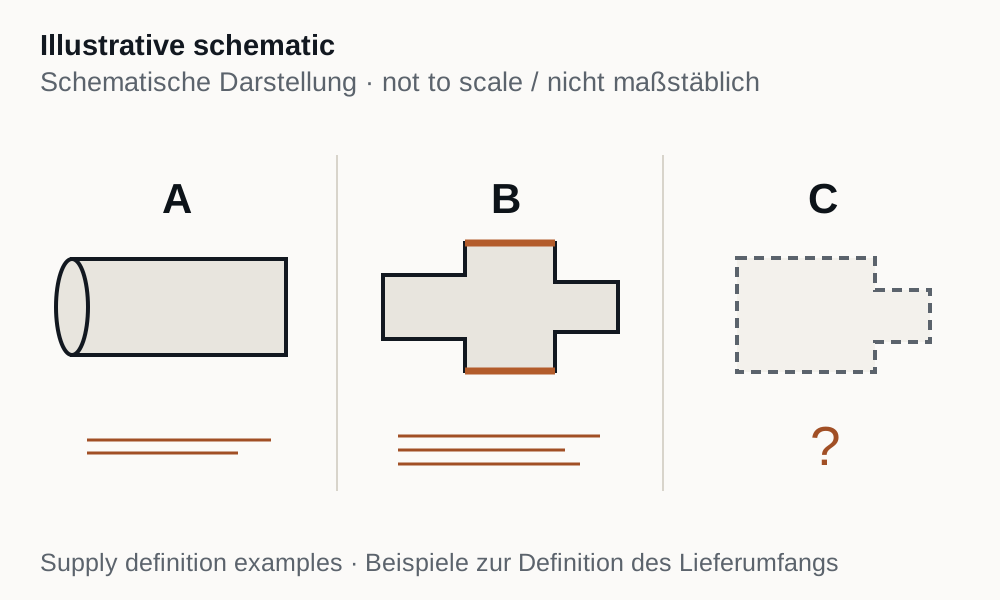
A — Catalogue specification. B — Approved project definition. C — Open requirements. The documents beneath the shapes represent the purchasing basis, not an inspection certificate.
What does drawing-based mean in a purchasing enquiry
In this guide, a drawing-based part is a component whose manufacturing requirements are defined for the project. That definition may combine a drawing, an approved model and supporting specifications. The German sourcing term Zeichnungsteile is used by manufacturers for this type of work; P+V, for example, distinguishes drawing-based special parts from standard parts in its own service descriptions.[1]
This is a practical purchasing distinction, not a rule that every drawing-based part must avoid all standard geometry. A part can use a standard thread or nominal form while its material, overall dimensions or final acceptance requirements remain specific to the customer's design. Conversely, a catalogue part may have a detailed drawing without becoming a new custom manufacturing project.
The useful question is: are you ordering the supplier's defined product, or asking the supplier to manufacture and accept a part to your project definition? Write that distinction into the enquiry before comparing prices.
Four situations that need different inputs
| Purchasing situation | Basis to identify | Decision to resolve |
|---|---|---|
| Catalogue component | Product number, applicable specification and selected options | Does that exact product meet the assembly requirement? |
| Modified catalogue or standard part | Original specification, requested changes and approved revised definition | Which original requirements still apply after modification? |
| Project-specific drawing-based part | Part number, revision, material, final condition and acceptance scope | Is the manufacturing definition released or still open? |
| Sample or worn part used as a reference | Sample condition, intended function and requirements needing clarification | What must be defined and approved before manufacture? |
Keep these categories visible when sourcing a group of parts. Asking several suppliers to quote “the same as the sample” can conceal different assumptions about material, wear, surface treatment and required records. A low price is difficult to assess when each quotation is based on a different part definition.
A drawing, model and photograph do different jobs
The drawing or approved product definition establishes the requirements to be used for manufacture and acceptance. A model can describe geometry, but the enquiry still needs to identify where material, surface and inspection requirements are defined. ASME's public description of Y14.5 explains its role in communicating dimensional and geometric requirements through drawings, digital models and related documents.[2] Name the standard and edition that your design actually uses; this article does not select a drawing system for the project.
A photograph helps explain a form or an assembly context. It cannot establish hidden dimensions, alloy condition, an allowed burr or a required measurement. A physical sample may provide useful reference information, but a worn sample can differ from the intended original geometry.
If the inputs disagree, record the difference and ask the authorized design owner to resolve it. State which information controls before releasing the manufacturing scope. The supplier's proposal to change a feature or material is an alternative for review until it has been accepted through the project's approval process.
Make the finished condition part of the definition
A custom component is not fully defined by its outline alone. For a sleeve, the bore may need to fit a mating shaft in a particular installation state. For a contact component, the dimensions may apply after a specified surface treatment. For a threaded part, acceptance may depend on the specified thread and finished condition.
These are examples of questions to resolve, not evidence that a reference part has met your requirements. Identify the material designation and required condition, critical interfaces, surface requirements and the records needed with samples or batches. When a choice is still open, name it explicitly rather than allowing it to become an unstated supplier assumption.
Keep quotation, design approval and sample acceptance separate
An enquiry starts a review. A quotation states a proposed commercial and technical scope. Approval of a drawing or design change and acceptance of a sample are separate decisions that need to be identified in the project records.
For a repeat order, use the approved revision and record what changed. For a development enquiry, say that the design is provisional and ask for assumptions to be listed. This lets purchasing compare offers while engineering retains control of the part definition. The quote-scope comparison worksheet supports that next step.
Connect your definition to the right component family
For rotational features, start with the CNC turning capability page or Swiss-type CNC turning page. The shaft and pin reference family can help describe a relevant form. These are entry points for discussion; the process is reviewed against your complete geometry and requirements.
Once the supply is defined, prepare the full package using the existing CNC machining RFQ checklist. It covers the file revision, material, quantities and acceptance information in detail. The purpose of this article is to make the prior purchasing decision clear, so that checklist is applied to the correct scope.
Frequently asked questions
Can a standard-shaped part still be drawing-based
Yes. A familiar outline or standard thread does not determine the whole supply. A project-specific material, dimension, surface or acceptance requirement can need a controlled manufacturing definition. Clarify whether you are buying an existing catalogue product or requesting manufacture to that definition.
Is a STEP model enough to obtain a quotation
It depends on what the model and accompanying specifications define. Identify the approved revision and where the supplier should find the material, final surfaces and acceptance requirements. Do not assume that geometric data alone supplies every manufacturing requirement.
Can I start a review with a sample instead of a drawing
You can introduce the requirement with a sample description, but distinguish the reference from the intended approved design. Identify wear, damage or unknown requirements and discuss what information must be established before manufacture. This does not imply a free reverse-engineering or drawing service.
Does receiving a quotation mean the drawing has been approved
Keep the decisions explicit. A quotation, design release, manufacturing acceptance and sample approval can address different questions. Review the agreed scope and record the approvals required for your project rather than treating one document as evidence of all of them.
Define the component before requesting the quote
Send the current part definition, material, quantities and required records. Label open requirements and the information that needs clarification, then request a drawing review.
Sources
[1] P+V — Drawing-based parts and logistics and CNC turned parts. Primary manufacturer examples of German purchasing terminology, accessed 2026-10-14. The terminology is referenced; that manufacturer's capacity, prices and service commitments are not adopted.
[2] ASME — Y14.5 Dimensioning and Tolerancing. Public scope of the engineering drawing and model language, accessed 2026-10-14. No standard tables or project-specific acceptance limits are reproduced.
Engineering purchasing guidance. Your approved part definition and agreed project scope determine the component to be supplied.